- Introduction
- What Dutch Home, Garden and Lifestyle SMEs Actually Make
- Entrepreneurial Opportunities: Where the Real White Space Is
- Urban farming and smart greenhouses
- Smart home installation and energy optimisation
- Circular and upcycled home goods
- E-commerce distribution using Dutch infrastructure
- The Tourist Lens: Where to Find These Products
- Cross-Border Candidacy: Is This Category a Good Fit for International Shipping?
- Shipping options compared
- A note on P2P shipping for small home and garden parcels
- Frequently Asked Questions
- What are the most exportable Dutch home and garden products?
- How many online stores sell home and garden products in the Netherlands?
- Is Germany a realistic market for Dutch home and garden SMEs?
- What shipping options does a small Dutch home goods business have for cross-border orders?
- Where can tourists find authentic Dutch home and garden products?
- What entrepreneurial opportunities exist in the Dutch home and garden sector?
- Sources
- Earn money and travel for free
- Buy everything from anywhere
- Send your luggage quickly
The Netherlands home garden lifestyle SME products and opportunities landscape is larger and more export-ready than most people realise.
Introduction
The Netherlands home garden lifestyle SME products and opportunities landscape is larger and more export-ready than most people realise. The country is the world’s second-largest agricultural exporter, and its ornamental horticulture sector alone, flowers, bulbs, plants, tree nursery products, generated €12 billion in a single year’s exports. That is not a cottage industry. As of Q2 2024, 18,385 online stores in the Netherlands were selling home and garden items, the second-largest category of Dutch e-commerce after fashion. Behind those numbers is a dense layer of small and medium businesses making, packing, and shipping goods that travel remarkably well across borders.
- 18,385 Dutch online stores sell home and garden products, the second-largest e-commerce category in the country
- Ornamental horticulture exports reached €12 billion; Germany absorbs a quarter of Dutch agricultural exports
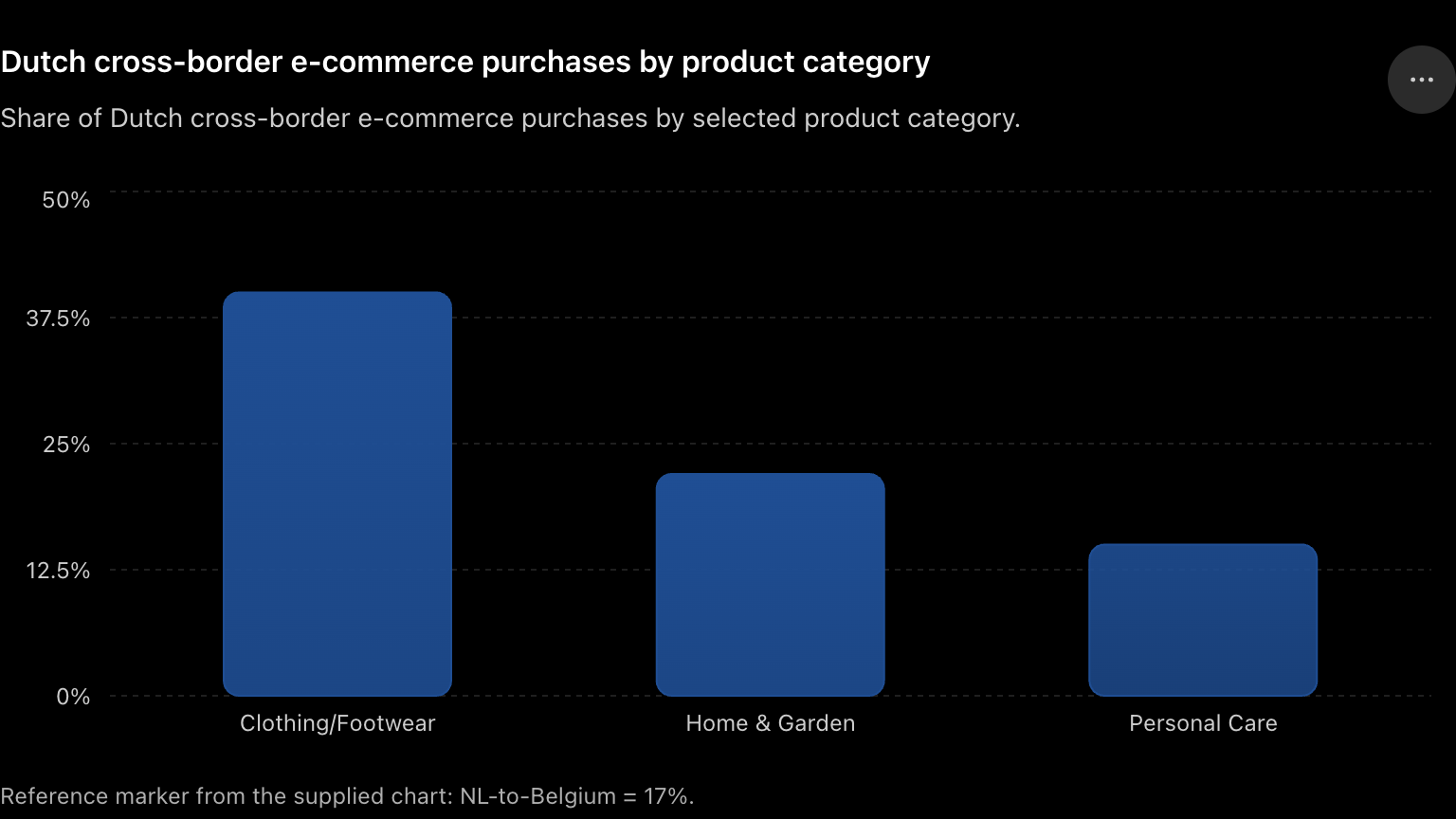
- Home and garden accounts for 22% of Dutch cross-border purchases, second only to clothing
- Entrepreneurial white space exists in urban farming, circular goods, smart home installation, and e-commerce distribution
- Conventional carriers, 3PLs, marketplaces, and P2P options all serve different scales of SME shipper
What Dutch Home, Garden and Lifestyle SMEs Actually Make
Flower bulbs and ornamental plants are the backbone. The Netherlands produces billions of spring bulbs annually, tulips, hyacinths, dahlias, and CBS confirms flowers and ornamental plants as a major Dutch export category. Germany alone takes roughly a quarter of all Dutch agricultural exports. For a small bulb grower, the infrastructure for international trade already exists; the question is whether to plug into it directly or through a distributor.
Ceramics and artisan homeware sit at the other end of the scale: small studios producing pieces that reflect the Dutch design sensibility, clean, practical, often Scandinavian-adjacent. These products photograph well, ship in standard parcels, and attract buyers on Etsy and independent webshops alike.
Garden accessories and outdoor furniture form a broad middle ground. Retail chains like Intratuin, Praxis, and Gamma dominate the consumer channel, but behind them sits a layer of independent SME suppliers making planters, raised beds, and specialist garden tools for both domestic and export markets.
Two newer sub-categories are growing fast. Smart home and energy devices, thermostats, lighting systems, solar management tools, are being driven by the Netherlands’ push toward full energy efficiency by 2030. And sustainable and upcycled lifestyle goods (recycled textiles, upcycled furniture, eco-packaging) are a direct product of the Dutch circular economy mindset, which is genuinely embedded in consumer culture here, not just marketing language.
Finally, specialty food-adjacent lifestyle products, aged Gouda, artisan stroopwafels, artisan jams, straddle the food and lifestyle boundary and are among the most consistent tourist purchases in the country.
Entrepreneurial Opportunities: Where the Real White Space Is
Urban farming and smart greenhouses
Sustainable food trends are creating real demand for hydroponic and rooftop herb and salad farms. Dutch government policy actively supports green agriculture, and Amsterdam restaurants are increasingly sourcing locally. The barrier to entry is lower than it looks: a rooftop or warehouse unit, a hydroponic kit, and a handful of restaurant accounts is a viable start.
Smart home installation and energy optimisation
As the 2030 energy efficiency target approaches, homeowners are actively looking for installers and advisers who understand smart thermostats, solar management, and home automation. This is a high-value, recurring-revenue service business with relatively low product inventory risk.
Circular and upcycled home goods
The Netherlands is at the forefront of EU circular economy initiatives. Entrepreneurs who can source post-consumer materials and turn them into home goods, furniture, textiles, decorative objects, have a structural tailwind from both consumer demand and EU policy. Pop-up stores and Instagram are the primary sales channels for early-stage brands in this niche.
E-commerce distribution using Dutch infrastructure
The Netherlands has become a key European fulfilment hub. NL e-commerce exports reached €18 billion in 2025, and Rotterdam and Schiphol give Dutch-based sellers a logistics advantage that most EU competitors cannot match. An entrepreneur who imports home or garden goods in bulk and sells through Bol.com, Amazon.de, or Etsy can access the full EU market from a single warehouse. The e-commerce ecosystem is mature and the carrier relationships are established.
The Tourist Lens: Where to Find These Products
The Bollenstreek, the bulb-growing region between Haarlem and Leiden, is the most concentrated source of flower bulbs in the world. Many farms sell direct, and the variety available at farm shops far exceeds what airport gift shops stock. Dutch horticulture centres on flower bulbs and greenhouse flowers, and the Bollenstreek is the geographic heart of that production.
For ceramics, sustainable homeware, and artisan lifestyle goods, Amsterdam, Utrecht, and Rotterdam all have active pop-up store scenes and local markets. These are not fixed addresses, they rotate seasonally, but a quick search on Instagram or local event listings will surface them. Utrecht in particular has become a hub for circular fashion and home goods brands, as covered in more depth in the Dutch SME fashion and lifestyle overview.
For aged Gouda and artisan food-lifestyle products, the cheese markets in Gouda and Alkmaar are the obvious destinations, but specialty food shops in any major Dutch city carry a comparable range without the tourist markup.
Cross-Border Candidacy: Is This Category a Good Fit for International Shipping?
The short answer is yes, and the data is specific. Home and garden goods account for 22% of Dutch cross-border e-commerce purchases, the second-largest category after clothing and footwear at 40%. For the NL-to-Belgium corridor specifically, home and garden represents 17% of cross-border purchases, again in second place behind clothing. Fashion is the parallel story: if you want the full picture of how Dutch design goods travel, the Dutch fashion SME article covers the category that sits just above home and garden in the cross-border rankings.
Germany is the primary opportunity. It absorbs a quarter of Dutch agricultural exports and is the top destination for Dutch cross-border shoppers, with 30% of Dutch cross-border purchases going to German sellers, meaning the reverse flow is equally established. Academic research on the Dutch-German borderland confirms that cross-border SME activity in this corridor gives businesses access to new markets and supply sources that domestic-only operators simply cannot reach.
Most home and garden products are non-perishable, rarely restricted by customs, and fit standard parcel dimensions. For a ceramics maker or a garden accessories brand, Belgium and Germany are genuinely reachable first steps without complex logistics arrangements. The broader cross-border candidacy analysis for Dutch SMEs puts the addressable market across six reachable countries at over €1.7 trillion, with roughly 8% of EU SMEs currently active in cross-border e-commerce, leaving most of the opportunity untapped.
One honest headwind: Euromonitor notes that domestic home and garden sales in the Netherlands face pressure from an ageing population, urbanisation, and market saturation. That pressure actually strengthens the case for cross-border expansion rather than weakening it.
Shipping options compared
| Carrier type | Best for | Typical cost signal | Customs guidance | Best product fit |
|---|---|---|---|---|
| Conventional carrier (DHL, PostNL, UPS) | Regular volume, any size | Per-parcel rates; discounts at volume | Basic documentation support | All standard parcels |
| 3PL via Rotterdam/Schiphol | High-volume, multi-market | Storage + fulfilment fee; lower per-unit at scale | Often included | Bulbs, garden accessories, ceramics in bulk |
| Marketplace fulfilment (Bol.com, Amazon) | Sellers already on platform | FBA/FBB fee per order | Platform handles VAT in many cases | Small, standardised items |
| P2P (e.g. SendByPass) | Very low volume, small parcels | Negotiated per trip; no minimum volume | Regulatory guidance included | Ceramics, small lifestyle gifts, bulb samples |
For a fuller breakdown of where each option breaks down in practice, carrier minimums, VAT registration friction, last-mile failures, the cross-border shipping challenges guide for Dutch SMEs covers the detail.
A note on P2P shipping for small home and garden parcels
For very small Dutch home and garden SMEs, a ceramics studio sending five parcels a week to Germany, or a bulb grower testing a Belgian market, conventional carrier minimums and 3PL volume thresholds can feel disproportionate to the order size. SendByPass is a P2P cross-border shipping marketplace that connects SMEs with verified student travelers who carry packages in spare luggage capacity. It operates a trust and compliance engine covering identity checks, escrow payments, and regulatory guidance. This is one option among several, and it is most relevant at low volumes where per-parcel carrier rates feel steep. SMEs shipping at scale will find 3PLs or direct carrier contracts more practical and cost-efficient.
Frequently Asked Questions
What are the most exportable Dutch home and garden products?
Flower bulbs, ornamental plants, ceramics, garden accessories, and sustainable lifestyle goods all travel well. They are non-perishable, fit standard parcel dimensions, and face minimal customs restrictions within the EU. Germany and Belgium are the most accessible first markets.
How many online stores sell home and garden products in the Netherlands?
As of Q2 2024, there were 18,385 online stores in the Netherlands selling home and garden items, making it the second-largest category of Dutch e-commerce after fashion, which had 21,735 stores.
Is Germany a realistic market for Dutch home and garden SMEs?
Yes. Germany absorbs roughly a quarter of Dutch agricultural exports and is the top destination for Dutch cross-border shoppers. Academic research on the Dutch-German borderland confirms established cross-border SME trade patterns in this corridor.
What shipping options does a small Dutch home goods business have for cross-border orders?
The main options are conventional carriers (DHL, PostNL, UPS), third-party logistics providers using Rotterdam or Schiphol infrastructure, marketplace fulfilment through Bol.com or Amazon, and peer-to-peer platforms for very low-volume shipments. The right choice depends on order volume, parcel size, and destination.
Where can tourists find authentic Dutch home and garden products?
The Bollenstreek region sells flower bulbs direct from farms. Amsterdam, Utrecht, and Rotterdam all have rotating pop-up markets and local stores selling ceramics, sustainable homeware, and artisan lifestyle goods. Cheese markets in Gouda and Alkmaar carry aged Gouda and artisan food products.
What entrepreneurial opportunities exist in the Dutch home and garden sector?
Urban farming and smart greenhouses, smart home installation and energy optimisation, circular and upcycled home goods, and e-commerce distribution using the Netherlands’ Rotterdam and Schiphol infrastructure are the clearest areas of white space identified by current market analysis.
Sources
- Washington Post, Netherlands: The World’s Second-Largest Agricultural Exporter, 2022 figure for €12B ornamental horticulture exports and Germany as top market
- CBS, The Netherlands in Numbers 2024: Biggest Export Products, confirms flowers and ornamental plants as a major Dutch export category
- BlossomYourContent citing CBS Statistics Netherlands, How Many Online Stores Are There in the Netherlands?, source for 18,385 home-and-garden online stores (Q2 2024)
- Euromonitor, Home and Garden in the Netherlands, 2024, covers retail players, sustainability trends, and demographic headwinds
- SendByPass blog, Best Dutch SME Products for Cross-Border Shipping, 2025, source for 17% home/garden share of NL-to-Belgium cross-border purchases and €1.7T addressable market
- Landmark Global, E-Commerce in the Netherlands in 2026, source for 22% home-and-garden share of Dutch cross-border purchases and Germany as top destination (30%)
- Landmark Global, Expanding Your E-commerce Brand from the Netherlands, 2024/2025, NL-to-Belgium specific breakdown and €1.7T six-market addressable market
- Mordor Intelligence, Netherlands E-commerce Market Trends and Share, 2025, source for €18B NL e-commerce exports and Rotterdam/Schiphol logistics advantage
- firm-nl.com, Top Import Export Business Opportunities in the Netherlands, 2025, covers NL as EU distribution hub and e-commerce ecosystem
- YouTube, 5 Small Business Ideas in Netherlands 2025, source for smart home, urban farming, and circular goods as emerging SME opportunities
- Radboud University, SME Internationalisation in the Dutch-German Borderland, academic source on cross-border SME activity in the NL-Germany corridor
- Netherlands Embassy Qatar, Dutch SME Economic Contribution Data, 2024/2025, source for 61.7% GDP contribution and €4.3B R&D investment by Dutch SMEs
- skotzen.travelonly.com, Top Souvenirs from a Springtime Trip to the Netherlands, consumer-facing source confirming flower bulbs and Gouda as top Dutch lifestyle products for tourists
- government.nl, Agriculture and Horticulture, confirms Dutch horticultural sector focus on flower bulbs and greenhouse flowers