- Introduction
- Does Packaging Actually Reduce Luggage Volume?
- How to Keep Fragile Items Safe in Your Luggage
- Which Items Deserve the Most Packaging Attention?
- What Packaging Tools Are Actually Worth Buying?
- Should You Wrap Your Suitcase at the Airport?
- A Note for Travelers Carrying Packages for Others
- Frequently Asked Questions
- What is the most effective way to reduce luggage volume when packing?
- How do I pack fragile items in a suitcase without them breaking?
- Which items need the most careful packaging when traveling internationally?
- Is it worth wrapping your suitcase at the airport?
- What are the most useful packing tools to buy before an international trip?
- Can I carry packages for others in my luggage when traveling internationally?
- Sources
- Earn money and travel for free
- Buy everything from anywhere
- Send your luggage quickly
Knowing how to pack luggage for international travel is one of those skills that sounds obvious until you are standing at a check-in counter paying an overweight fee, or unzipping your bag at the destination to find a broken perfume bottle soaking into your clothes.
Introduction
Knowing how to pack luggage for international travel is one of those skills that sounds obvious until you are standing at a check-in counter paying an overweight fee, or unzipping your bag at the destination to find a broken perfume bottle soaking into your clothes. Both situations are preventable. The decisions that prevent them happen at home, before you leave. This article walks through five specific questions: how to actually reduce volume, how to protect fragile items, which categories need the most attention, what tools are worth buying, and whether wrapping your suitcase at the airport makes sense.
Does Packaging Actually Reduce Luggage Volume?
Yes, and the method matters more than the size of the suitcase. Two travelers with identical bags can arrive at check-in with very different weights depending entirely on how they packed.
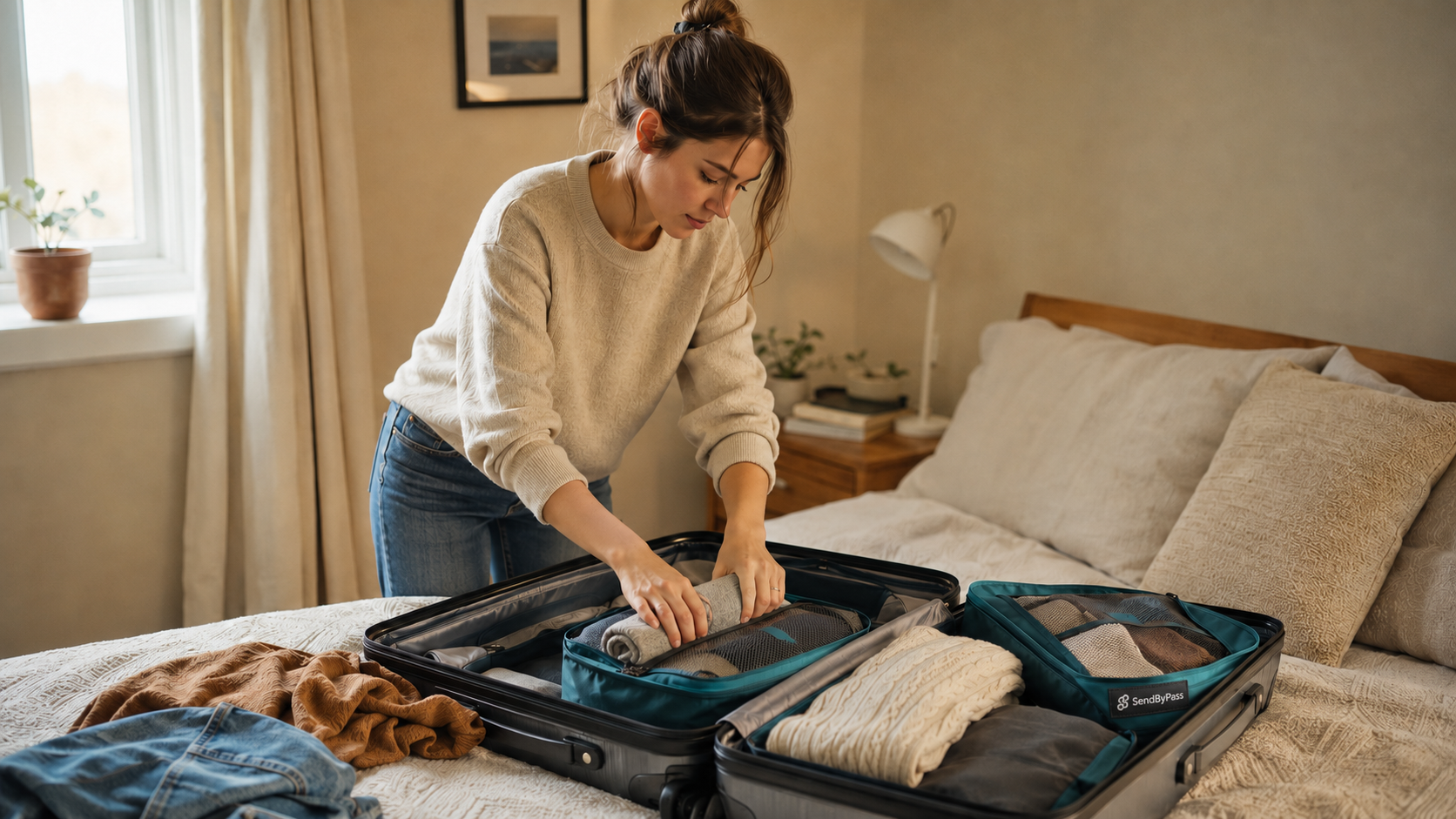
Rolling clothes instead of folding is the most consistent space-saver. Eagle Creek’s packing guide notes that rolling reduces wrinkles and compresses clothing more efficiently than flat folding. Compression packing cubes take this further: they compartmentalize by category (tops, bottoms, underwear) and let you squeeze air out before closing. The result is a bag that stays organized and uses its volume properly instead of trapping dead air around loosely folded items.
One rule worth following: three tops per one pair of pants, one color palette. It sounds restrictive but it eliminates the “just in case” clothes that reliably push bags over the weight limit. Condé Nast Traveler’s packing advice adds another practical fix: wear your bulkiest items onto the plane. A heavy coat and thick boots worn through the airport do not count toward your checked or carry-on allowance.
A travel writer with five years of professional experience on long-haul routes including Indonesia to Germany makes a point that sounds simple but is easy to forget: always leave a little extra space. You will buy something abroad. The worst moment is finding a perfect item with no room to bring it home.
Toiletries are another lever. Travel-size containers or buying basics at the destination (shampoo, sunscreen) cuts both weight and the risk of liquid spills onto everything else.
How to Keep Fragile Items Safe in Your Luggage
An academic study published in the International Journal of Research Publication and Reviews found that well-designed packaging using corrugated cardboard combined with foam inserts significantly reduces transport damage by absorbing shocks and preventing movement. It also found that many people do not test their packaging under real conditions before travel, which leads to preventable breakage. Air travel is not automatically gentle on bags. Luggage gets dropped, stacked, and dragged.
The practical approach is layered protection:
- Wrap fragile items in soft clothing (cotton T-shirts work well). This serves double duty: cushioning and no extra material needed. WorldTrips recommends this as the first line of defense.
- Add bubble wrap for higher-value or more delicate items. It absorbs impact that clothing alone cannot handle, according to Shiprocket’s fragile shipping guide.
- Fill empty space around fragile items with packing peanuts or foam. Movement inside a bag is what breaks things, not pressure alone.
- Place fragile items on top, with heavier items at the bottom. Eagle Creek and Compack USA both flag weight distribution as a basic principle that most people ignore.
- Consider carry-on placement for anything genuinely breakable. You control how a carry-on bag is handled. A checked bag, you do not.
Which Items Deserve the Most Packaging Attention?
Not everything needs special treatment. But certain categories fail repeatedly when packed carelessly.
Glass and ceramics (souvenirs, perfume bottles, snow globes) need individual wrapping and cushioning on all sides. Electronics are both fragile and expensive: use hard-shell cases or dedicated pouches, and keep cables and chargers in a single zipper pouch so security checks do not scatter them. Erin Condren’s packing guide recommends transparent mesh pouches for cables specifically because they speed up airport screening.
Liquids and toiletries are a consistent source of damage to other items. Sealed travel-size containers inside a waterproof zip-lock bag contain any leak before it reaches your clothes. Shoes carry dirt and moisture: a dedicated waterproof shoe bag keeps that contained. Wet swimwear needs a sealable waterproof pouch, not just a plastic bag from the hotel.
Jewelry tangles and scratches easily. A travel jewelry organizer solves this. One low-cost alternative: thread necklaces through a drinking straw to keep them from knotting, as noted by WorldTrips.
One piece of advice from Erin Condren worth taking seriously: the safest packaging decision for expensive jewelry or irreplaceable items is leaving them at home.
What Packaging Tools Are Actually Worth Buying?
You do not need to buy everything. A small set of affordable tools covers most situations.
| Tool | Protects Against | Best Use Case | Approx. Cost |
|---|---|---|---|
| Compression packing cubes | Wasted space, disorganization | Clothing by category | €15, €40 per set |
| Bubble wrap | Impact and shock | Glass, ceramics, fragile items | €3, €10 per roll |
| Packing peanuts / foam | Movement inside container | Filling void space around fragile items | €5, €15 per bag |
| Waterproof shoe bags | Dirt and moisture transfer | Shoes packed with clothing | €5, €15 per pair |
| Waterproof pouches / zip-lock bags | Liquid leaks, moisture | Toiletries, wet swimwear | €2, €10 |
| Travel jewelry organizer | Tangles, scratches | Necklaces, rings, earrings | €8, €20 |
| Transparent mesh pouches | Lost cables, slow security checks | Electronics accessories, chargers | €5, €12 per set |
One practical hack from experienced long-haul travelers: small pill bottles repurposed for Q-tips or headache tablets. They weigh almost nothing and keep small items from rattling loose at the bottom of a bag.
The sustainable packaging market reached $271.86 billion in 2023, which reflects growing demand for eco-friendly materials. For travelers, this means more options for reusable packing materials rather than single-use plastic wrap.
Should You Wrap Your Suitcase at the Airport?
It depends on what you are carrying and how much you trust baggage handling on your route.
What wrapping does: it adds a layer against scratches and scuffs, deters opportunistic tampering through zippers, and holds the bag together if a latch fails in transit. What it does not do: it does not protect contents from impact (that is internal packaging’s job), and it does not prevent the airline from losing the bag.
When it makes sense: soft-shell bags with fragile or high-value contents, unreliable latches, or routes through airports with a history of baggage problems. When it is probably not worth it: hard-shell suitcases with TSA-approved locks, short trips, or carry-on-only travel.
The National Motor Freight Traffic Association notes that clear labeling is as important as any physical protection for cargo. The same applies to checked luggage: a clear, secure luggage tag is not optional. Condé Nast Traveler makes the point plainly: assume the airline could lose your checked bag, and pack your carry-on accordingly. Your most important items should never go in the hold.
A Note for Travelers Carrying Packages for Others
Some travelers carry packages in spare luggage space for senders or small businesses. This is already common practice, and many people manage it independently using their own judgment and existing contacts.
When you are carrying someone else’s goods, the same packaging principles apply but the stakes are higher. The item belongs to someone else. Fragile contents need proper cushioning. Liquids need sealed containers. Electronics need hard-shell protection. Before accepting any package, confirm what is inside and that it is properly labeled. For the compliance side of carrying goods across borders, the blog’s guide on how to legally carry cargo as an air traveler covers what travelers need to know about customs rules and restrictions.
SendByPass is one structured option in this space. It is a peer-to-peer marketplace that matches verified travelers with SMEs needing cross-border shipping, using a compliance engine that includes identity verification, escrow payments, and regulatory guidance. It is one approach among several, and travelers who already carry packages through their own networks are doing this work without it. If you are curious about the earning side of this, the post on how to make money with a suitcase covers the broader landscape of luggage-sharing platforms.
Good packaging is a one-time investment of maybe thirty minutes and a few euros in materials. It removes an entire category of travel stress: the broken souvenir, the overweight fee, the liquid-soaked clothes. Most of the tools cost less than a single checked-bag fee. Pack them once, reuse them every trip.
Frequently Asked Questions
What is the most effective way to reduce luggage volume when packing?
Rolling clothes instead of folding them and using compression packing cubes are the two most reliable methods. Wearing bulky items (coat, heavy boots) onto the plane rather than packing them also saves significant space and weight without any extra cost.
How do I pack fragile items in a suitcase without them breaking?
Use layered protection: wrap each fragile item in soft clothing first, add bubble wrap for higher-value pieces, and fill any empty space around them with foam or packing peanuts to prevent movement. Place fragile items on top of heavier ones, and consider carrying genuinely breakable items in your carry-on bag where you control how it is handled.
Which items need the most careful packaging when traveling internationally?
Glass and ceramics, electronics, liquids and toiletries, shoes, and wet swimwear are the categories that most often cause problems when packed carelessly. Each needs a specific solution: individual wrapping, hard-shell cases, sealed waterproof pouches, or dedicated shoe bags.
Is it worth wrapping your suitcase at the airport?
It depends on your bag and route. Wrapping makes sense for soft-shell suitcases carrying fragile or high-value items, bags with unreliable latches, or travel through airports with known baggage handling issues. For hard-shell suitcases with TSA locks on short trips, it is generally unnecessary.
What are the most useful packing tools to buy before an international trip?
Compression packing cubes, waterproof pouches for liquids and wet items, transparent mesh pouches for electronics cables, and a travel jewelry organizer cover most situations. Bubble wrap and packing peanuts are worth having if you are carrying fragile items. None of these are expensive, and most can be reused across many trips.
Can I carry packages for others in my luggage when traveling internationally?
Yes, many travelers do this. The key requirements are knowing exactly what is inside any package you carry, ensuring it is properly packaged and labeled, and understanding the customs rules for your route. The guide on how to legally carry cargo as an air traveler covers the compliance side in detail.
Sources
- Happy to Wander, Must-Know Suitcase Packing Tips, practical lived-expert advice on packing lists, organization, and leaving space.
- PackageIt, Essential Supplies for Shipping Fragile Items Safely, fragile shipping supplies and sustainable packaging market figure.
- Shiprocket, Tips For Packaging And Shipping Fragile Items, cushioning materials and fragile item definitions.
- Eagle Creek, The Ultimate Travel Packing List For Any Vacation, rolling vs. folding, compression cubes, weight distribution.
- Condé Nast Traveler, The Golden Rules of Packing, wearing bulky items on the plane, assuming luggage loss.
- Compack USA, Packaging Tips for Fragile Products, box sizing, weight distribution, avoiding overpacking.
- WorldTrips, How To Pack a Suitcase More Efficiently, wrapping fragile items in clothing, jewelry organizers.
- International Journal of Research Publication and Reviews, Role of Packaging in Protecting Products During Transportation, academic study on corrugated cardboard, foam inserts, and transport damage.
- National Motor Freight Traffic Association, Importance of Packaging and Organization in Transport, labeling and cargo organization principles.
- Erin Condren, 20 Essential Travel Packing Tips, packing cubes, rolling, toiletries, valuables, wet swimwear pouches.