- Introduction
- The Most Reliable Sources to Check Before You Pack
- Can You Check an Item's Eligibility Before You Reach the Gate?
- The Items Customs Officers Find Most Suspicious
- Items That Are Surprisingly Illegal on Specific Routes
- What Happens If You Are Caught With an Illegal Item You Did Not Know About
- A Note on Peer-to-Peer Shipping and Compliance
- Frequently Asked Questions
- How do I check if an item is legal to bring across borders before I travel?
- What is the difference between a prohibited item and a restricted item at customs?
- Can I be held legally responsible for an item I did not know was illegal?
- What items are most commonly confiscated at customs?
- What should I do if a customs officer flags an item I am carrying?
- Are there items that are legal at home but illegal at my destination?
- Sources
- Earn money and travel for free
- Buy everything from anywhere
- Send your luggage quickly
Harding Bush, a former Navy SEAL and Operations Manager at Global Rescue, was nearly detained in Jordan after customs officers found two-way radios in his carry-on.
Introduction
Harding Bush, a former Navy SEAL and Operations Manager at Global Rescue, was nearly detained in Jordan after customs officers found two-way radios in his carry-on. The radios were perfectly legal at home. In Jordan, possessing them without authorization is generally illegal. The only reason he avoided jail was a business card from the King’s security detail. Most travelers are not that lucky. Knowing how to check if an item is legal to bring across borders is not a bureaucratic formality, it is the difference between a smooth trip and a very bad day.
- Prohibited and restricted are not the same thing, the distinction matters enormously at the border.
- Several everyday items (protein powder, pork products, certain medications) routinely trigger customs delays or confiscation.
- Ignorance is not a legal defense once you cross a border.
- You can verify most items before you ever reach the airport, using free official sources.
- Carrying a package for someone else puts you legally on the hook if the contents are illegal.
The Most Reliable Sources to Check Before You Pack
There is no single global database for customs rules. Each country sets its own laws, and they change. But several authoritative sources cover the most common routes and item categories.
| Source | What it covers | Best for | How to access |
|---|---|---|---|
| CBP Know Before You Go | Prohibited vs. restricted items, agricultural rules, civil penalties | Travelers entering or leaving the US | cbp.gov |
| U.S. State Dept Laws Abroad | Items you cannot take out of other countries (gold, antiques, electronics) | Americans traveling internationally | travel.state.gov |
| Destination country embassy | Country-specific rules for specific items | Any traveler unsure about one specific item | Search “[country] embassy [your city]” |
| Your airline | Dangerous goods, battery rules, carry-on vs. checked restrictions | Anyone flying with electronics, gases, or unusual items | Airline website or customer service |
| IATA dangerous goods rules | Flammable, explosive, toxic, and pressurized items | Shippers and travelers with batteries, aerosols, or chemicals | homeaffairs.gov.au links to IATA guidance |
The prohibited vs. restricted distinction is the one most travelers miss. Prohibited means the law forbids it, full stop. Restricted means it is allowed, but only with the right permit, declaration, or documentation. Absinthe, for example, is restricted entering the US, not banned outright, but subject to specific rules. Haitian animal hide drums are restricted due to anthrax risk. The CBP prohibited and restricted items list walks through both categories item by item.
For EU and Netherlands-based travelers, the Dutch Douane (customs authority) website and the EU’s TARIC database are the equivalent go-to tools for verifying tariff codes and import restrictions on specific goods.
Can You Check an Item’s Eligibility Before You Reach the Gate?
Yes, and the earlier you check, the more options you have.
CBP recommends contacting them before your trip departs if you are uncertain about a specific item. Your airline is the next call. Australian Home Affairs advises checking with the airline before you arrive at the airport, and suggests packing uncertain items in checked baggage if the airline permits it.
One thing many travelers do not realize: the security screening officer has the final say, even if the airline already said yes. An officer can override the airline’s approval at the gate. That is not arbitrary, it reflects the fact that officers see the actual item, not a description of it.
If an item is flagged as “not acceptable for carriage” (meaning not illegal, just not permitted on that flight), it is generally returned to you. If it is restricted, it may be held pending paperwork or duty payment. If you have not yet cleared immigration, you may be able to return to the public area and mail the item to yourself, though this depends entirely on the airport layout.
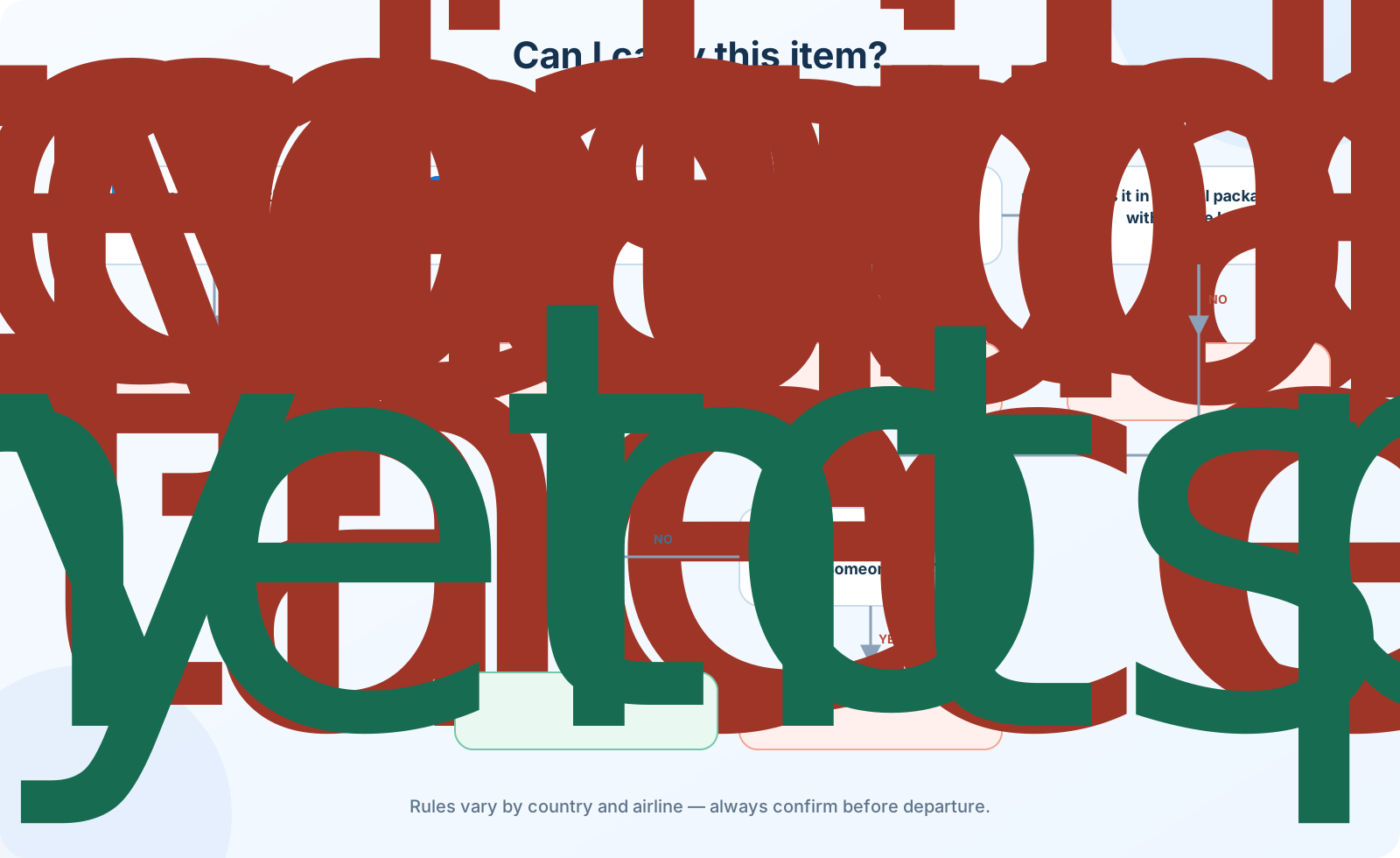
Use this quick decision flow before you pack anything you are unsure about:
The Items Customs Officers Find Most Suspicious
Customs officers are pattern-recognition professionals. Certain items reliably attract attention, not always because they are illegal, but because they match the profile of things that often are.
Unlabeled powders and supplements are a consistent trigger. Travelers in Australia and the UAE have been held for hours while labs tested what turned out to be protein powder or vitamins. The problem is not the powder itself, it is the unlabeled bag. Keep supplements in their original sealed containers.
Medications without packaging are another common issue. In countries like Japan or the UAE, a pill organizer with no labels can trigger a lab test. Heart medication, thyroid pills, insulin, all can be flagged. Carry the original box and, for prescription drugs, a letter from your doctor.
Lithium batteries and electronics cause more delays than almost any other category. Non-removable batteries in checked luggage, tablets packed in suitcases, heated vests with battery packs still connected, all set off alarms. A buzzing electric razor or toothbrush in a checked bag has caused bags to be torn apart on suspicion of an improvised device. Switch everything off and, where possible, carry batteries in your hand luggage.
Even novelty items are not safe. TSA found grenade-shaped bottle openers in checked luggage at Newark Liberty Airport. They were intended as groomsmen gifts. The shape was enough to trigger a full bag search.
Items That Are Surprisingly Illegal on Specific Routes
This is where travelers get caught most often, not through intent, but through assumption. “It’s legal at home” is not a customs argument.
CBD and cannabis products are the clearest modern example. Even products marketed as THC-free can be treated as controlled substances across much of Asia and the Middle East. Advanced screening can detect cannabinoids. “I didn’t know” does not move the needle at the border.
Camouflage clothing is illegal in several Caribbean countries. Chewing gum is banned in Singapore. These are not urban legends, Global Rescue documents both as real enforcement situations.
Food categories catch people constantly. A woman crossing from the US into Mexico was stopped with 227 pounds of bologna hidden under her rear car seats. Importing pork from the US into Mexico is not permitted. She was fined $1,000. The lesson is not about the quantity, it is that “common food” is not a safe assumption at any border.
Other items worth knowing about, drawn from official sources:
- Antiques and cultural artifacts: a 3,000-year-old Egyptian sarcophagus was flagged at Miami International after being shipped from a Spanish art gallery. ICE and CBP traced the illegal antiquities paperwork. The case ended in seizure.
- Butane curling irons with spare refill cartridges: the iron itself may be allowed; the spare butane cartridge (a pressurized gas) is confiscated immediately.
- Electronic equipment not declared on arrival: if you bring a laptop into a country and do not declare it, you may not be permitted to take it back out.
- Large amounts of cash or gold: subject to declaration thresholds in most countries, with seizure as the penalty for non-disclosure.
What Happens If You Are Caught With an Illegal Item You Did Not Know About
The short answer: the law does not require that you knew. Global Rescue’s security experts are direct about this, you are bound by local laws the moment you cross a border, regardless of intent. The U.S. State Department says the same.
Outcomes range from confiscation (the best case) through fines, detention, expulsion, and in serious cases, criminal prosecution. For undeclared agricultural products, CBP civil penalties run up to $1,000 per first-time offense for non-commercial quantities. Commercial violations are assessed at significantly higher rates.
The legal nuance matters here. Criminal liability generally requires both the act and knowledge of it (what lawyers call actus reus and mens rea). In practice, if a carrier genuinely had no knowledge of what they were carrying, prosecution is less likely, but you may still spend time and money arguing the case. Real incidents have involved older travelers arrested at customs for drugs placed in their luggage by someone they trusted.
The critical question customs officers ask: “Are you carrying anything for anyone else?” If the answer is yes, you need to know what is in that package.
A Note on Peer-to-Peer Shipping and Compliance
If you carry packages across borders for others, whether informally or through a platform, the customs question above is not hypothetical. It applies to you directly. The “I didn’t know what was inside” defense is weaker the more you were compensated, and weaker still if the circumstances were unusual.
Some travelers and small businesses already manage this through conventional carriers (DHL, FedEx, PostNL) or freight forwarders, which handle documentation and compliance on their behalf. Others use informal arrangements, which shift all legal responsibility to the individual carrier.
One platform that addresses this specifically is SendByPass, a peer-to-peer shipping marketplace that connects senders with verified student travelers carrying spare luggage capacity. Its compliance engine includes KYC identity checks, fraud screening, and regulatory guidance, so both the sender and the traveler know what is in the package and that it has been vetted before the trip. It is one option among several, and many travelers and businesses already handle cross-border shipping perfectly well without it. But for anyone new to carrying packages for others, understanding how to legally carry cargo on a flight is the necessary starting point before accepting any package from a third party.
The single most useful habit: check the destination country’s official customs authority and your airline before you pack, not after. Keep items in original packaging with visible labels. Declare anything you are unsure about, declaration is almost always the safer outcome compared to concealment. And if someone asks you to carry something for them, know what it is before you say yes.
Frequently Asked Questions
How do I check if an item is legal to bring across borders before I travel?
Start with the official customs authority of your destination country. For US-bound travel, the CBP’s Prohibited and Restricted Items page covers most categories. For other destinations, the U.S. State Department’s Laws Abroad page and the destination country’s embassy are the most reliable sources. Your airline can also confirm rules for specific items, especially electronics and dangerous goods.
What is the difference between a prohibited item and a restricted item at customs?
A prohibited item is forbidden by law, you cannot bring it in under any circumstances. A restricted item is allowed, but only with the correct permit, declaration, or documentation. Missing that paperwork turns a restricted item into a customs violation at the border.
Can I be held legally responsible for an item I did not know was illegal?
Yes, in most jurisdictions. Ignorance of local law is not a recognized defense once you cross a border. Criminal prosecution typically requires proof of knowledge, but you can still face confiscation, fines, and detention while the matter is investigated. If you are carrying a package for someone else and do not know its contents, your legal exposure increases significantly.
What items are most commonly confiscated at customs?
Unlabeled powders and supplements, medications without original packaging, lithium batteries in checked luggage, food products (especially meat and agricultural items), and items that resemble weapons in shape, even novelty items. Cultural artifacts and antiques without proper provenance documentation are also a frequent trigger for seizure.
What should I do if a customs officer flags an item I am carrying?
Stay calm and cooperate. If the item is “not acceptable for carriage” (not illegal, just not permitted on that specific flight), it will generally be returned to you. If it is restricted, it may be held pending paperwork or payment of duties. If you have not yet cleared immigration, you may be able to return to the public area and arrange to mail the item home, though this depends on the airport layout.
Are there items that are legal at home but illegal at my destination?
Many. CBD products are treated as controlled substances in parts of Asia and the Middle East. Camouflage clothing is illegal in several Caribbean countries. Chewing gum is banned in Singapore. Pork products face import restrictions in several countries. Over-the-counter medications that are freely available in one country can be prescription-only or banned in another. Always verify the specific rules for your destination, not just your country of origin.
Sources
- U.S. Customs and Border Protection, Know Before You Go, official guidance on prohibited vs. restricted items, agricultural rules, and civil penalties
- U.S. Customs and Border Protection, Prohibited and Restricted Items, detailed item-by-item list including medications, cultural artifacts, and animal products
- U.S. Department of State, Laws Abroad, covers items you cannot take into or out of other countries; last updated August 2025
- Australian Department of Home Affairs, What you can and can’t bring, covers dangerous goods, weapons, flammable items, and the role of security screening officers
- Global Rescue, 6 Examples of Illegal Items and Actions When Traveling the World, includes the Harding Bush story and expert commentary on local law consequences
- BorderBuddy, 10 Bizarre Things People Have Tried to Ship Internationally, real confiscation stories including bologna, novelty grenades, and an ancient sarcophagus
- Reddit r/legaladviceofftopic, Am I liable if unknowingly transporting illegal substances?, community legal discussion on mens rea, actus reus, and willful ignorance; posted December 2024
- Travel Stack Exchange, Can I return to the airport if my item is going to be confiscated?, practical answers on what happens at the gate and options available to travelers