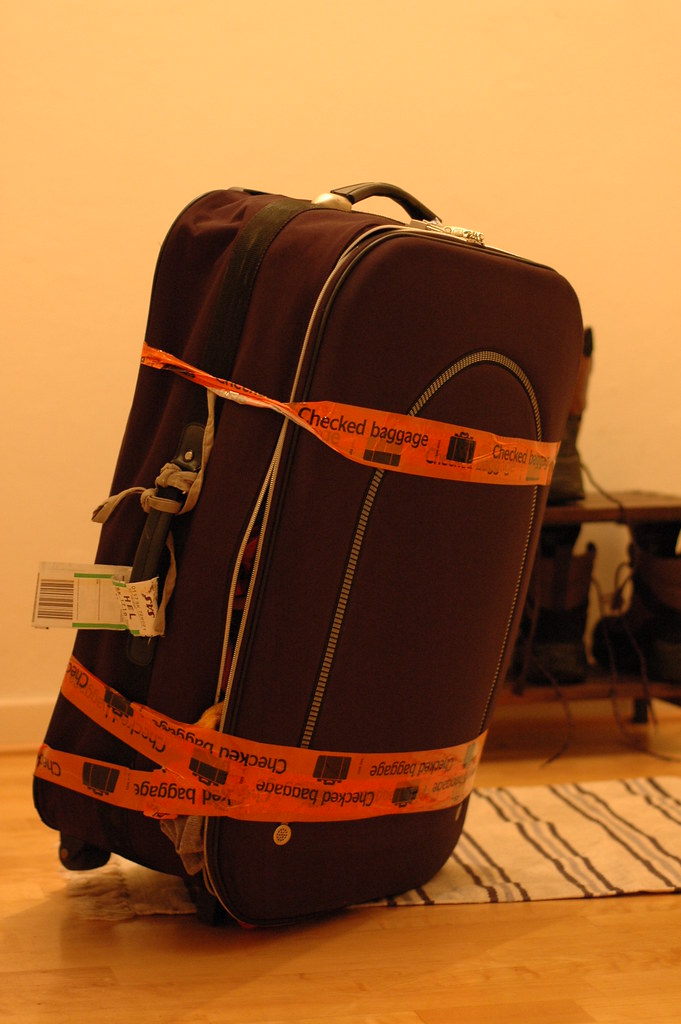
- Earn money and travel for free
- Buy everything from anywhere
- Send your luggage quickly
EU Handling Fee on Small Parcels: Costs for Dutch Shops

In Dutch Customs' own example, a parcel with 2 shirts, 3 sweaters and 1 hat has three declaration lines, so the EU handling fee on small parcels comes to 3 x €2 = €6, with VAT on top.
Introduction
In Dutch Customs’ own example, a parcel with 2 shirts, 3 sweaters and 1 hat has three declaration lines, so the EU handling fee on small parcels comes to 3 x €2 = €6, with VAT on top. The charge looks small per line, but it follows the types of product in a parcel, and it comes on top of the €3 customs duty that already applies. For a Dutch webshop, the real question is whether your goods are shipped from outside the EU, because that decides who pays first and what the bill looks like from 1 November. From there you can see which way of shipping keeps the cost predictable.
The dates to remember
Two separate charges apply, with different start dates and different lifespans.
The €3 customs duty has applied since 1 July 2026. It is charged per item on parcels bought from outside the EU and worth up to €150.[1] It is temporary and ends on 1 July 2028.[2] The reason is that the EU’s customs data system, which would allow exact duty per product, is not expected before then.[1]
The €2 handling fee starts on 1 November 2026. It applies to every e-commerce shipment from outside the EU that is delivered to a consumer, including parcels above €150.[3] It has no end date.[4] On the same day, product identifiers become mandatory: an SKU, a manufacturer identifier, and a GTIN or EAN where the product has one.[5]
For your budget this means the duty is a two-year bridge and the fee is here to stay. Plan around the fee for the long term.
EU handling fee on small parcels
The fee follows types of product, not garments and not parcels. Dutch Customs gives this example: one parcel declared in DECO, a Dutch customs declaration system, holds 2 shirts, 3 sweaters and 1 hat. That makes 3 declaration lines, so the declarant pays 3 x €2 = €6, and VAT is charged on the fee.[3]
The working rule is one line per type of product. Identical items share a line: Irish Revenue counts two identical pens as one item, while a pen, a notebook and a key ring are three.[6] Items count as the same when they share a tariff classification and description.[2] That classification is the HS code, the product code customs uses, so a wrong code can split or merge your lines.
| Parcel contents | Declaration lines | €3 duty | €2 fee | Total before VAT |
|---|---|---|---|---|
| One product type, parcel up to €150 | 1 | €3 | €2 | €5 |
| Pen, notebook and key ring (€10 of goods) | 3 | €9 | €6 | €15 |
| Two identical pens | 1 | €3 | €2 | €5 |
| 2 shirts, 3 sweaters, 1 hat (Dutch Customs example) | 3 | Depends on parcel value | €6 | €6 plus any duty |
| Parcel over €150 | One per product type | No flat €3; normal duty rate per product | €2 per line | Normal duty plus €2 per line |
The flat €3 does not apply above €150. Each product then carries its normal duty rate.[5]
Here is what that means at scale. A shop sending 400 single-product parcels a month from outside the EU pays €3 + €2 = €5 per parcel. That is €2,000 a month and €24,000 a year before VAT. Ask your carrier or customs agent how the lines of your typical parcel are built, because that number decides your real cost.
Who pays the fee first
The declarant pays first. That is whoever files the customs declaration, and in the Dutch systems the fee is paid in DECO or DMS after the declaration is submitted.[3][7] The declarant can be the shop, the platform, a customs representative or the carrier. Carriers that declare typically pass the fee on to the shop.[8]
The fee is not refunded, even when the buyer returns the parcel.[3][6] So a returned parcel still costs you €2 per line. Put into your sales terms who carries customs costs and what happens on returns, so you do not settle it order by order.
VAT is charged on the fee. Under IOSS, the EU scheme where VAT is collected at checkout on goods up to €150, the shop or platform collects that VAT from the consumer.[3]
For buyers
A Dutch consumer ordering straight from a non-EU shop will see either a higher price or a carrier invoice, depending on who declares. Tweakers reports that the webshop pays the fee and duty when it uses IOSS.[9] Dutch Customs has a separate page for people ordering for themselves.
Checking if your shop is affected
What matters is where the goods are when the customer orders, and who ships them to the consumer. Go through these in order:
- Are the goods already in the EU when the customer orders? Then normal rules apply and there are no per-parcel charges.[2][10]
- Are the goods outside the EU and sent directly to a consumer in the EU, as with dropshipping from China, US or UK stock? Then you are affected.[3]
- Do you import in bulk into your own EU warehouse? Normal import duty and VAT apply, and after that you sell from EU stock.[2]
- Is it a business-to-business import? The fee applies to goods delivered directly to a consumer, so this case is not covered by it. Confirm the rest with your customs agent.
Most Dutch shops selling from EU stock fall under the first or third step and are not hit. For VAT and One Stop Shop reporting on those sales, see our guide to shipping internationally as a Dutch SME.
EU stock, carrier or post
Holding stock in the EU removes the per-parcel charges. A carrier or fulfilment partner that declares for you keeps the charges, but you can see them and are billed per line. With postal services, you have to get the terms confirmed yourself.
| Setup | Who declares | What is billed and when | Returns | Question to ask |
|---|---|---|---|---|
| EU stock | You or your importer, once, on the bulk import | Normal duty and VAT on the bulk import; no per-parcel charges on parcels shipped from EU stock | No per-parcel fee to lose | Does my importer offer fiscal representation? A Dutch gateway with fiscal representation is one route.[11] |
| Carrier or fulfilment partner (3PL, a warehouse that stores and ships for you) that files the declaration | The carrier or 3PL, if it acts as declarant | €2 per line, usually passed on to you; some China shipping lines pre-charge parcels from 26 October[4] | The fee is not refunded, so expect to pay for returned parcels[3] | Who is the declarant, what is the per-line price, and do you pre-charge? |
| Postal services | The postal operator or its customs partner; get this in writing | Ask for the per-line price and whether it arrives per parcel or on a monthly invoice | Ask whether any part is credited; Dutch Customs does not refund the fee | Who declares, what do you bill per line, and how does the bill reach me? |
Do not start shipping through a postal service on assumptions. Get the answers to these questions in writing first.
Traveller shipping and customs
Some shops ask whether carrying goods by traveller gets around the charges. It does not. It suits a few low-volume or urgent cases, and the goods stay subject to customs and airline rules.
The model works like this: a platform matches a shop with a traveller, they agree a price, the payment is held in escrow, and it is released once delivery is verified. Platforms such as SendByPass work with verified student travellers on this basis.
On customs, Dutch Customs lets air passengers bring in goods bought outside the EU tax-free up to €430 per person. Above that, duty and VAT are due, and the goods go through the “Goods to declare” exit. Not declaring can bring a fine and back-payment, and travellers cannot pool their allowances.[12] The European Commission ties these allowances to goods that are not resold,[13] so do not count on them for shop stock.
Not everything can be carried. Drinks and tobacco are limited, and money and gold, animal products and food, plants, art, protected species, counterfeit goods, weapons, drugs and medicines are restricted or banned. Airports add rules on liquids and sharp objects.[14]
The risks are practical. Timing depends on the traveller’s flight, there is no carrier-grade tracking, and the shop stays responsible for the paperwork. Most shops are better served by EU stock or a declaring carrier. Our longer review of student crowdshipping covers the safety and legal checks.
Checklist before 1 November
- Show the total price, including shipping, early in the cart, and show the delivery time.[10]
- Check your product data: SKU and the other identifiers that become mandatory on 1 November.[5]
- Ask your carrier or 3PL how declaration lines are built, and whether they pre-charge parcels handed over in the last week of October (reported for some China lines).[4]
- Update your sales terms on who bears customs costs and on the fee not being refunded for returns.
- Re-check the amounts on the Dutch Customs fee page before you finalise prices.[3]
Frequently Asked Questions
Is the €2 charged per parcel or per product line?
Per declaration line. A parcel with 2 shirts, 3 sweaters and 1 hat has 3 lines and costs €6 in fees.[3] Identical items share one line.
Does the handling fee apply to goods above €150?
Is the fee refunded if the buyer returns the parcel?
No. The fee is not refunded, including on returns, so build that cost into your return terms.[3]
Sources
- Erasmus University Rotterdam: Jouw pakketje van buiten de EU wordt duurder, maar waarom?
- Collective Studio: EU €3 Customs Duty on Small Parcels
- Dutch Customs: Handling fee for e-commerce
- Commercive: EU handling fee from 1 November
- Bigblue: End of de minimis in the EU
- Irish Revenue: new Union Handling Fee
- Douane Nederland: Afhandelingsvergoeding voor e-commerce
- De Zaak: Afhandelingsvergoeding van 2 euro
- Tweakers: Nieuwe heffing voor pakketjes van buiten de EU
- PrestaHU: The €3 EU duty on small parcels
- Archipel Tax Advice: The 2026 EU Customs Reform
- Douane Nederland: Belasting betalen over aankopen uit het buitenland
- European Commission: Consumer goods you can carry in your suitcase
- Douane Nederland: Dit mag u niet zomaar meenemen