- Introduction
- The Conventional Tier: Carriers You Already Know
- DHL, FedEx, and UPS
- Hermes (Evri) and PostNL
- DB Schenker and Freight Forwarders
- Aggregator Platforms: One Dashboard, Many Carriers
- The Main Platforms
- New Logistics Models: P2P Shipping and Micro-Networks
- The SME Angle: Why Carrier Choice Hits Differently at Small Scale
- Matching Option to Shipment: A Weight-and-Type Guide
- Under 2 kg: Documents and Small Goods
- 2 to 30 kg: Standard Parcels
- 30 kg and Above: Pallets and Freight
- SendByPass: One Example of the P2P Model
- Conclusion
- Frequently Asked Questions
- What is the cheapest international shipping option for small parcels under 2 kg?
- What is a shipping aggregator and how does it help small businesses?
- Is peer-to-peer shipping reliable enough for business use?
- When should a small business use a freight forwarder instead of a parcel carrier?
- Can I use DHL alternatives for shipping from the Netherlands to Germany?
- Do shipping aggregators replace my existing carrier relationship?
- Sources
- Earn money and travel for free
- Buy everything from anywhere
- Send your luggage quickly
International shipping alternatives to DHL for small businesses span a wider ecosystem than most people realize, from national postal services and rate-comparison dashboards to freight specialists and peer-to-peer pla...
Introduction
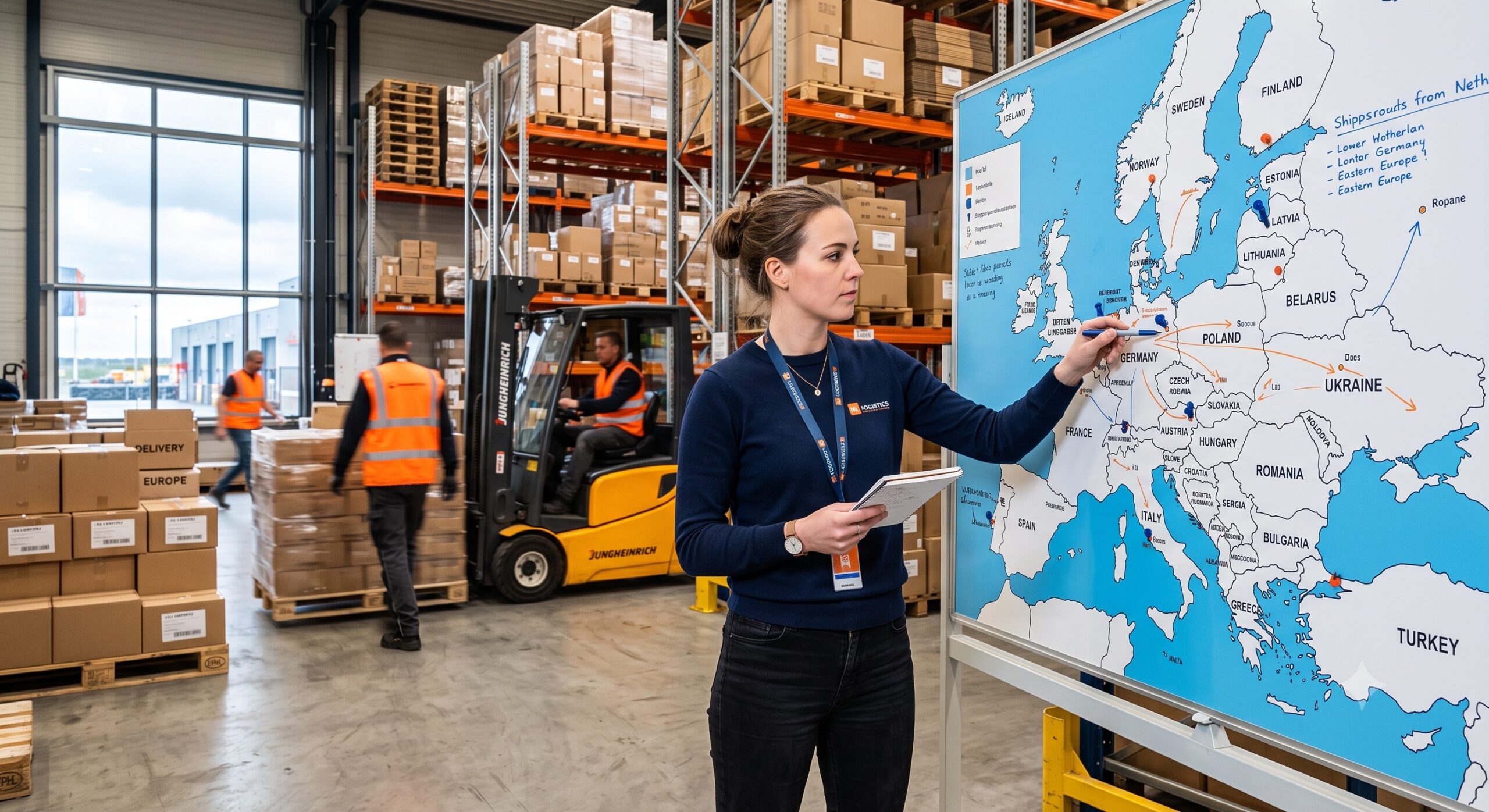
International shipping alternatives to DHL for small businesses span a wider ecosystem than most people realize, from national postal services and rate-comparison dashboards to freight specialists and peer-to-peer platforms where real travelers carry parcels in spare luggage. DHL is the default that most small shippers reach for first, and for good reason: it covers 220+ countries and handles customs paperwork reliably. But it is one node in a much larger network, and for a Dutch shop shipping a 2 kg sample to Berlin, that network includes at least a dozen genuine options. This article maps them by shipment type and business size, so you can match the right tool to the actual parcel in front of you.
- Conventional carriers (DHL, FedEx, UPS, Hermes, PostNL) differ significantly in price, speed, and weight limits.
- Aggregator platforms like Easyship and Sendcloud sit on top of carriers and let small shippers compare rates without changing their workflow.
- Peer-to-peer and gig logistics models route parcels through real travelers, filling a niche for small, non-urgent items.
- Carrier choice hits differently at small scale: low volume means no negotiated rates, so the right platform matters more.
- The best option depends on weight, urgency, and whether customs support is needed, not on brand familiarity alone.
- A simple weight-and-type framework can narrow the decision quickly for most shipments.
The Conventional Tier: Carriers You Already Know
Before comparing alternatives, it helps to understand what the standard carriers actually offer and where they fall short. Most SMEs default to one name and never look sideways.
DHL, FedEx, and UPS
DHL Express is the benchmark: global reach, solid customs handling, and strong tracking. The price reflects that. Easyship’s rate comparison puts DHL Express Worldwide at roughly $54 for an 8.8 lb parcel, compared to UPS Standard at around $25 for the same weight. That gap matters when you are shipping dozens of parcels a month on thin margins.
FedEx offers a money-back guarantee on select services and handles fragile or temperature-sensitive goods well. It is a reasonable choice when product integrity matters more than cost. UPS competes well on European corridors and has strong tracking, making it a practical alternative on the NL-Germany route specifically.
All three are reliable in the sense that parcels usually arrive. But reliability is not the same as perfect. Consumentenbond data shows that 35% of Dutch consumers experienced parcel problems in 2024, with 75% citing unreliable timing as the core issue. That figure covers the whole carrier market, not just DHL, and it is a reminder that even established names have gaps.
Hermes (Evri) and PostNL
Hermes, now rebranded as Evri in the UK but still operating as Hermes across much of Europe, offers roughly 2-day delivery within the EU and access to around 15,000 package stations. Quicargo’s carrier comparison notes parcel insurance up to €500, which is meaningful for small businesses shipping mid-value goods.
PostNL is the natural starting point for Dutch shippers. It is often the cheapest option for lightweight domestic and near-border shipments, and its international service covers most EU destinations. Speed and tracking are less consistent than express carriers, but for non-urgent parcels the price difference can be significant.
DB Schenker and Freight Forwarders
For B2B shipments moving in bulk, the picture changes. DB Schenker, now operating at significant scale following the DSV acquisition, covers 90+ countries and is built for commercial freight. This is not the tool for a 3 kg e-commerce parcel, but it is the right conversation for pallets and regular high-volume lanes.
Aggregator Platforms: One Dashboard, Many Carriers
An aggregator is software that connects your online shop to 40 or 250 carriers simultaneously and shows you their rates side by side. You pick the best option, print the label, and the carrier handles the rest. The key point is that aggregators do not replace carriers. They sit on top of them. For a small business already using DHL, adding an aggregator can surface a cheaper rate on the same route without changing the workflow at all.
The Main Platforms
Easyship integrates with 250+ couriers and automatically calculates duties and taxes at checkout. It connects to Shopify, WooCommerce, and Magento, and covers 220 countries. For a small shop expanding into new markets, the automatic customs documentation alone saves hours per week.
Shippo works with 40+ carriers and is designed for plug-and-play simplicity. It suits small stores that want rate comparison and label printing from a single screen without complex setup.
ShipStation handles multi-channel selling: Shopify, Amazon, eBay, Etsy, and Walmart in one place. Its automation rules sort shipments by weight and destination, which matters once you are processing more than 20 orders a day.
Sendcloud is particularly well-suited to EU expansion. It offers multi-language checkout and localised delivery options, which reduces cart abandonment when selling into Germany, France, or Spain.
Quicargo sits in a different lane. It is a B2B pallet shipping specialist operating primarily in Europe, including the Netherlands. If you are moving freight rather than parcels, it is worth a look before defaulting to a traditional freight forwarder.
The practical value of aggregators is largest for shippers who lack the volume to negotiate carrier rates directly. A business sending 30 parcels a month has no leverage with DHL’s account team. An aggregator gives that same business access to pre-negotiated rates across dozens of carriers, which is the same advantage a large shipper gets through volume.
New Logistics Models: P2P Shipping and Micro-Networks
Alongside the conventional carrier-and-aggregator stack, a genuinely different model has been growing: goods moving with real people who are already travelling the route.
The concept is called peer-to-peer (P2P) or crowdsourced shipping. A traveler flying from Amsterdam to Berlin has spare luggage capacity. A small business needs a 1 kg sample to arrive in Berlin by Thursday. A platform matches them, handles payment in escrow, and releases funds when delivery is confirmed. No carrier network required.
The numbers behind this model are worth understanding. Last-mile delivery costs make up 53% of total shipping expenses, which is the part of the journey where traditional carrier networks are least efficient. The gig economy in logistics reached $582.2 billion in 2025, reflecting how broadly this approach has scaled across different transport modes.
P2P is not a universal solution. It does not work for urgent shipments, fragile goods, or anything requiring temperature control. Timing depends on when a suitable traveler is making the trip. But for small, non-perishable parcels on popular travel corridors, it can be significantly cheaper than express carriers and faster than economy postal services. For a deeper argument on why this model is growing, the blog post on why crowdsourced shipment is necessary in the modern era covers the structural reasons in detail.
The SME Angle: Why Carrier Choice Hits Differently at Small Scale
Most of the options above exist and work. The question is why so many small businesses never use them. Part of the answer is familiarity: DHL is the name everyone knows, so it is the name everyone types into the booking form. Part of it is that the problem only becomes visible once you start shipping internationally.
Around 70% of EU SMEs operate domestically and have never needed to solve this problem. For those that do cross a border, the learning curve arrives all at once: carrier rates, customs paperwork, duties and VAT, and the customer-service fallout when something goes wrong.
That last point matters more than it looks. When a parcel arrives late or gets lost, the SME absorbs the cost of the replacement, the refund, and the customer relationship damage. The Consumentenbond finding that 75% of Dutch consumers who experienced parcel problems cited unreliable timing is not just a consumer statistic. It is a business cost that falls on the sender.
Small shippers also lack volume leverage. A business sending 500 parcels a month can negotiate a rate with DHL directly. A business sending 30 cannot. That is precisely the gap that aggregator platforms close, and it is why the options in Section 2 matter more at small scale than they do for large shippers. For a detailed look at the customs and compliance layer of this problem for Dutch businesses specifically, the post on cross-border shipping challenges for Dutch SMEs goes deeper.
Matching Option to Shipment: A Weight-and-Type Guide
The fastest way to narrow the field is to start with what you are actually shipping. Weight and urgency together eliminate most of the wrong options immediately.
Under 2 kg: Documents and Small Goods
National postal services (PostNL, Deutsche Post) are usually the cheapest option here. An aggregator like Easyship or Shippo can surface better rates quickly. P2P traveler shipping is a viable option for non-urgent, non-fragile items in this weight band, where the cost savings are most visible relative to express carrier pricing.
2 to 30 kg: Standard Parcels
This is the core territory for DHL, FedEx, UPS, and Hermes. Aggregators add real value here by comparing rates across all four without manual quote requests. Hermes covers this range with EU delivery in roughly 2 days and insurance up to €500. FedEx is the better choice for fragile or high-value goods where the money-back guarantee matters.
30 kg and Above: Pallets and Freight
B2B freight forwarders take over at this weight. DB Schenker covers 90+ countries and is built for commercial freight volumes. Quicargo specialises in EU pallet shipping and is worth comparing against traditional forwarder quotes. P2P is not suitable above this threshold.
The table below maps the main options across the criteria that matter most for a small business making this decision.
| Option | Best for (weight / type) | Typical delivery time | Price range | Tracking quality | SME-friendly |
|---|---|---|---|---|---|
| DHL Express | Any weight, urgent, international | 1, 3 days | High | Excellent | Moderate (no volume discount at low scale) |
| FedEx | 2, 30 kg, fragile or temperature-sensitive | 1, 5 days | High | Excellent | Moderate |
| UPS | 2, 30 kg, EU corridors | 2, 5 days | Mid, High | Excellent | Moderate |
| Hermes (Evri) | Under 30 kg, standard EU parcels | ~2 days EU | Mid | Good | Good (15,000 drop-off stations) |
| PostNL / national post | Under 2 kg, non-urgent | 3, 7 days | Low | Basic | Good |
| Easyship / Sendcloud (aggregator) | Any weight; rate comparison layer | Depends on carrier chosen | Low, High (carrier-dependent) | Carrier-dependent | Very good (built for SMEs) |
| Quicargo | Pallets and freight, EU B2B | 2, 5 days EU | Mid | Good | Good for volume shippers |
| P2P / traveler shipping | Under 5 kg, non-urgent, non-fragile | Variable (travel-dependent) | Low | Platform-dependent | Good for niche use cases |
| DB Schenker | 30 kg+, B2B freight, 90+ countries | 3, 10 days | Mid, High | Excellent | Better for larger SMEs |
SendByPass: One Example of the P2P Model
SendByPass is a marketplace that connects small businesses with verified student travelers who carry parcels in their spare luggage capacity. It is one specific implementation of the P2P model described above, not a replacement for conventional carriers.
The platform works in four steps: matching sender and traveler, negotiating payment, holding funds in secure escrow, and releasing the payout on confirmed delivery. What distinguishes it from informal arrangements is a trust and compliance engine that includes identity verification (KYC), fraud checks, and GDPR-compliant data handling. The platform is registered in Lithuania and built with legal compliance as a foundation rather than an afterthought.
A student traveler can earn around €50 per trip carrying a parcel. For the sender, the cost is typically lower than express carrier rates on the same route. The honest scope: this works best for small, non-urgent parcels on routes where student travelers are active. The NL-Germany corridor is the starting point, but the model applies wherever travel routes overlap with shipping demand.
For readers who are travelers rather than senders and want to understand the earning side, the blog has a separate post on side hustles for students in the Netherlands that covers this alongside other income options.
Conclusion
There is no single best carrier. The right choice depends on three variables: how heavy the shipment is, how urgently it needs to arrive, and whether customs support is required. For most small businesses already using DHL, the lowest-friction upgrade is an aggregator platform that surfaces cheaper rates on the same routes without changing the workflow. For bulk freight, a specialist like Quicargo or DB Schenker is the right conversation. For small, non-urgent parcels on active travel corridors, P2P platforms offer a genuinely different cost structure.
The practical next step is to run one shipment through an aggregator like Easyship or Sendcloud and compare the output against your current DHL rate. The difference is often visible immediately, and the setup takes less than an hour.
Frequently Asked Questions
What is the cheapest international shipping option for small parcels under 2 kg?
National postal services like PostNL or Deutsche Post are usually the cheapest for lightweight, non-urgent parcels. Aggregator platforms like Easyship or Shippo can quickly surface even lower rates by comparing across 40 to 250 carriers simultaneously. P2P traveler shipping is also worth considering for non-fragile items on popular routes.
What is a shipping aggregator and how does it help small businesses?
A shipping aggregator is software that connects your online shop to multiple carriers and displays their rates side by side. Instead of requesting quotes from DHL, FedEx, and UPS separately, you see all options in one dashboard and pick the best rate. For small businesses that lack the volume to negotiate carrier contracts directly, aggregators provide access to pre-negotiated rates that would otherwise be unavailable.
Is peer-to-peer shipping reliable enough for business use?
P2P shipping works reliably for small, non-urgent, non-fragile parcels on routes where travelers are active. Timing is less predictable than express carriers because it depends on when a suitable traveler is making the journey. Platforms that include KYC verification, escrow payments, and delivery confirmation add a layer of accountability. It is not suitable for urgent, fragile, or high-volume shipments.
When should a small business use a freight forwarder instead of a parcel carrier?
Freight forwarders become relevant when shipments exceed roughly 30 kg or when you are moving pallets rather than individual parcels. Specialists like DB Schenker (90+ countries) and Quicargo (EU pallet focus) are built for this scale. For standard e-commerce parcels, a parcel carrier or aggregator is more practical and usually cheaper.
Can I use DHL alternatives for shipping from the Netherlands to Germany?
Yes, and the NL-Germany corridor has particularly good coverage. Hermes offers roughly 2-day EU delivery with 15,000 drop-off stations. UPS competes well on European lanes. Aggregators like Sendcloud are specifically designed for EU expansion and localised delivery options. PostNL International is also a practical starting point for lightweight shipments on this route.
Do shipping aggregators replace my existing carrier relationship?
No. Aggregators sit on top of carriers, they do not replace them. If you already have a DHL account, an aggregator can still show you DHL rates alongside alternatives. You keep your existing relationships and gain the ability to compare them against other options on every shipment.
Sources
- Quicargo: The Best Shipping Alternatives for DHL, profiles Hermes (15,000 stations, €500 insurance, 2-day EU delivery) and Quicargo as a B2B pallet specialist.
- Easyship: Top 10 International Shipping Services, rate comparison table covering DHL Express, FedEx, UPS, and DB Schenker profiles.
- Olimp Warehousing: Best Ecommerce Shipping Solutions and Platforms for 2026, defines logistics aggregators and covers Easyship and Sendcloud.
- Ben Gordon Palm Beach: 7 Best E-Commerce Shipping Platforms for Small Businesses, profiles Shippo, ShipStation, and Easyship with SME use cases.
- ShipMercury: SMEs, Logistics and Tech, provides gig economy size ($582.2B in 2025) and last-mile cost share (53%).
- JUSDA Global: Comparing the Best Logistics Companies for International Shipping, DB Schenker profile covering 90+ countries and post-DSV acquisition scale.
- Easyship: USPS Alternatives for eCommerce Businesses, additional Easyship platform detail and DHL Express international positioning.