- Introduction
- The Dutch SME Product Categories Most Competitive Abroad
- Fashion, Clothing, and Footwear
- Home, Garden, and Lifestyle Goods
- Beauty, Cosmetics, and Personal Care
- Specialty Food and Beverages
- Sporting Goods and Outdoor Equipment
- Electronics and Tech Accessories
- How Large Is the Opportunity? Sizing the Market
- How Many Dutch SMEs Are Actually Shipping Cross-Border Today?
- Platforms and Tools That Help Dutch SMEs Reach International Buyers
- Marketplaces
- Direct-to-Consumer Platforms
- Logistics Partners and 3PLs
- Conventional Carriers and Postal Services
- A Note on P2P Shipping: Where SendByPass Fits
- Conclusion
- Frequently Asked Questions
- Which Dutch product categories sell best internationally?
- How many Dutch SMEs currently ship cross-border?
- What is the best platform for a Dutch SME to start selling internationally?
- Which international markets are most accessible for Dutch SMEs?
- What are the main barriers stopping Dutch SMEs from shipping cross-border?
- Is peer-to-peer shipping a realistic option for Dutch SMEs?
- Sources
- Earn money and travel for free
- Buy everything from anywhere
- Send your luggage quickly
The best Dutch SME products for cross-border shipping come from a country that sits at the geographic center of a 170-million-consumer European market, with Rotterdam as Europe's largest port by cargo tonnage and Schi...
Introduction
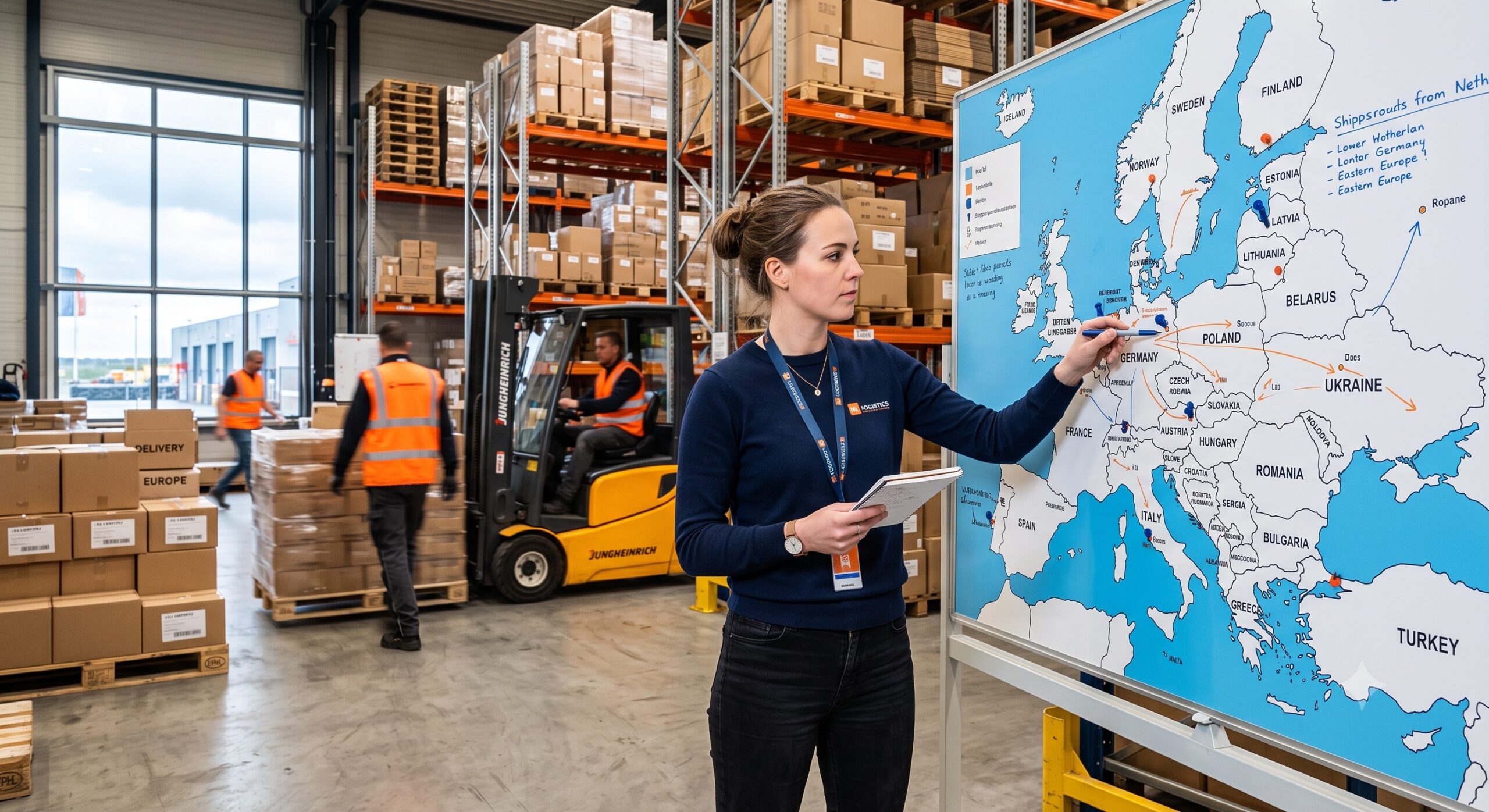
The best Dutch SME products for cross-border shipping come from a country that sits at the geographic center of a 170-million-consumer European market, with Rotterdam as Europe’s largest port by cargo tonnage and Schiphol as its fourth-largest cargo airport. That position is not just a logistics advantage, it is a genuine commercial opportunity for small and mid-sized Dutch businesses that make the right products. This article profiles the six product categories with the strongest cross-border potential, sizes the addressable market, quantifies how many Dutch SMEs are actually shipping internationally today, and maps the platforms already enabling expansion.
- Fashion, home goods, beauty, specialty food, sporting goods, and electronics are the six Dutch SME categories with the clearest cross-border demand signals.
- Six reachable international markets represent a combined opportunity worth over €1.7 trillion.
- Roughly 70% of EU SMEs still sell only domestically; EU-wide cross-border participation sits around 8%.
- Amazon, Shopify, Etsy, specialist 3PLs, and conventional carriers are the main platforms Dutch SMEs use today.
- The right shipping method depends on product type, volume, and destination, no single platform fits all.
The Dutch SME Product Categories Most Competitive Abroad
Not every Dutch product travels well. Perishables face cold-chain costs. Bulky items eat into margin. But several categories have a track record of crossing borders smoothly, backed by real purchase data from the Netherlands’ nearest and most accessible markets.
| Category | Key Destination Market | Demand Signal | Primary Platform Fit |
|---|---|---|---|
| Fashion, clothing & footwear | Belgium, Germany | 37% of cross-border purchases from NL to Belgium | Shopify, Amazon, Etsy |
| Home, garden & lifestyle | Belgium, Germany | 17% of cross-border purchases from NL to Belgium | Etsy, Amazon, own webshop |
| Beauty & personal care | Germany, France | Flagged as underserved, high-growth globally | Shopify, Amazon, Instagram |
| Specialty food & beverages | Germany, UK, Belgium | Underserved category with strong cultural differentiation | Own webshop, Etsy, specialist retailers |
| Sporting goods & outdoor | Germany, Belgium, Nordics | Underserved; NL cycling culture adds authenticity | Amazon, own webshop |
| Electronics & tech accessories | Germany, France, Belgium | Long-established top cross-border seller category | Amazon, Shopify |
Fashion, Clothing, and Footwear
Fashion is the dominant category. According to Landmark Global’s analysis of Dutch e-commerce exports, clothing and footwear account for 37% of cross-border purchases made by Belgian consumers from Dutch sellers. That is not a marginal share, it is more than double the next category.
Brand variety drives the decision. Landmark Global finds that 46% of Belgian cross-border buyers choose a Dutch seller specifically because of product variety they cannot find locally. For a small Dutch fashion brand, that is a real competitive edge, not a marketing claim. Germany’s €88.8 billion e-commerce market is described in the same research as a “reliability-focused” market where Dutch retailers have natural geographic and cultural reach.
Home, Garden, and Lifestyle Goods
The second-largest category at 17% of NL-to-Belgium cross-border purchases. Dutch design sensibility, practical, clean, often Scandinavian-adjacent, travels well into neighboring markets. Home goods are also relatively easy to ship: they are non-perishable, rarely restricted by customs, and fit standard parcel dimensions.
For a small Dutch ceramics maker or a garden accessories brand, Belgium and Germany are genuinely reachable first steps, not distant ambitions.
Beauty, Cosmetics, and Personal Care
DHL’s cross-border e-commerce research flags beauty and cosmetics as one of the most underserved categories globally, meaning demand from international buyers is outpacing the supply of accessible cross-border sellers. Dutch cosmetics brands that can offer products unavailable in a buyer’s local market have real room to differentiate on availability and trust.
The category also ships well: most beauty products are compact, lightweight, and non-perishable. Customs classification is generally straightforward within the EU.
Specialty Food and Beverages
Stroopwafels, aged Gouda, Dutch craft gin, artisan chocolate, these products carry cultural distinctiveness that generic grocery items do not. The same DHL research identifies specialty food as an underserved cross-border category with strong upside.
The honest caveat: perishables add logistics complexity. Temperature-sensitive products require faster, more expensive shipping. Non-perishable specialty food (packaged, shelf-stable) is a much easier starting point for a small producer testing international demand.
Sporting Goods and Outdoor Equipment
The Netherlands’ cycling culture gives Dutch sporting goods brands something genuine to stand on. A Dutch cycling accessories brand pitching to German or Belgian buyers is not manufacturing credibility, the country’s reputation is real. DHL’s research lists sporting goods as another underserved cross-border category, which means competition from established international sellers is still relatively thin.
Electronics and Tech Accessories
Electronics and fashion are described in the DHL research as the “long-known cross-border top sellers.” The Netherlands ranks 8th on the Global Innovation Index, which gives Dutch tech accessory makers and electronics SMEs a credibility signal in export markets. This category is competitive, though, margins are thinner and differentiation is harder than in lifestyle or food.
How Large Is the Opportunity? Sizing the Market
The numbers are large enough to take seriously, even for a small webshop.
- €1.7 trillion+, combined value of the six key international markets reachable from the Netherlands (Landmark Global)
- €88.8 billion, Germany’s e-commerce market, the most immediate large-scale destination for Dutch sellers (Landmark Global)
- €18 billion, Belgium’s e-commerce market, the closest and most culturally familiar export destination (Landmark Global)
- ~8%, share of EU SMEs currently active in cross-border e-commerce, per McKinsey data cited by SEKO Logistics
The Netherlands itself is the 18th-largest economy in the world and 5th-largest in the Eurozone, with a GDP of €1.27 trillion in 2024. That base supports a domestic supplier ecosystem strong enough to produce export-quality goods across all six categories above.
One practical finding from the DHL research is worth noting for Dutch SMEs targeting quality-conscious German or Belgian buyers: retailers who offer premium, time-definite shipping grow roughly 1.6 times faster than those who do not. That is not an argument for expensive shipping, it is an argument for reliable shipping, which is a different and more achievable standard for most small businesses.
A data gap worth flagging: NL-specific cross-border revenue broken down by SME product category is not publicly available in a single consolidated source. CBS (Statistics Netherlands) and Thuiswinkel.org publish sector-level e-commerce figures that would sharpen these estimates for anyone doing detailed market sizing before entering a new country.
How Many Dutch SMEs Are Actually Shipping Cross-Border Today?
The honest answer is: not many, relative to the opportunity.
Eurobarameter data shows that roughly 70% of EU SMEs sell only domestically and have never shipped cross-border. The EU-wide share of SMEs actively selling to other EU countries sits at around 8%, based on McKinsey figures cited by SEKO Logistics. That is less than one in ten businesses.
The Netherlands has a mature domestic e-commerce market, with some of the highest online shopping participation rates in Europe. But high domestic participation does not automatically translate into cross-border activity. A Dutch webshop that sells well to Dutch customers may have never considered whether its products would also sell in Düsseldorf or Antwerp.
Countries like France, Germany, and the UK are specifically cited in the WIC Internet cross-border research as having SME communities “highly engaged in cross-border e-commerce,” supported by national policy and funding programs. The Netherlands is not listed in that group, which suggests the gap between Dutch SME potential and actual cross-border participation is still wide.
It is worth being direct about one thing: many Dutch SMEs that do ship cross-border are doing it successfully already, through PostNL International, DHL, or established 3PLs, without needing new platforms or new approaches. The 8% figure is not a failure, it reflects the real cost and complexity barriers that make cross-border a deliberate choice rather than a default. The question for any individual business is whether the opportunity in a specific market justifies those costs.
Platforms and Tools That Help Dutch SMEs Reach International Buyers
The platform landscape is broader than most small business owners realize. The right starting point depends on what you sell, how much volume you expect, and how much operational complexity you can absorb.
Marketplaces
Amazon’s EU marketplaces (.de, .fr, .es, .it) are the most direct route to scale for Dutch SMEs with standardized products. The German Amazon marketplace alone gives access to the largest e-commerce market in continental Europe. Research on SME international expansion consistently identifies Amazon as the primary platform for cross-border sales alongside Shopify and Etsy, according to academic analysis of SME e-commerce internationalization. The trade-off is fees, competition, and limited brand control.
Etsy is particularly well-suited to Dutch artisan, craft, home goods, and lifestyle SMEs. It supports international shipping natively and attracts buyers specifically looking for distinctive, non-mass-market products, which maps directly onto the Dutch product categories most competitive abroad.
Bol.com dominates the Dutch and Belgian marketplace landscape and is the natural first step for any NL-based seller wanting to reach Belgian consumers without building a separate storefront. It is not a global platform, but for the NL-Belgium corridor it is the most frictionless starting point available.
Direct-to-Consumer Platforms
Shopify with its international markets features lets Dutch SMEs run localized storefronts with multi-currency pricing and translated content. It gives more brand control than a marketplace and is widely used by fashion and lifestyle brands that want to own the customer relationship. The operational overhead is higher than a marketplace listing, but so is the margin.
Social channels, Instagram, TikTok, Facebook, are not platforms in the logistics sense, but they are cited as primary customer acquisition channels for SMEs in international markets, especially for fashion and lifestyle categories. A Dutch candle brand or a cycling accessories maker can build a German audience organically before investing in logistics infrastructure.
Logistics Partners and 3PLs
Landmark Global works directly with Dutch retailers expanding to Belgium, Germany, and beyond, integrating with the Bpost network for last-mile delivery. For SMEs that want a managed cross-border logistics solution without building their own carrier relationships, this kind of specialist partner reduces the operational burden significantly.
SEKO Logistics operates a Rotterdam warehouse that serves as an EMEA fulfillment hub, the Manscaped brand is one example of a company using the Netherlands as a distribution center for European expansion. For Dutch SMEs with enough volume to justify warehousing, this model shifts the complexity to a specialist.
For a full breakdown of the practical shipping challenges, customs compliance, carrier costs, delivery reliability, the blog post on cross-border shipping challenges for Dutch SMEs covers the operational detail that this article does not.
Conventional Carriers and Postal Services
PostNL International, DHL, FedEx, and UPS remain the baseline for most Dutch SMEs shipping cross-border. They offer the broadest destination coverage, established customs processes, and predictable transit times. For low-volume shippers, the per-parcel cost is higher than for businesses with negotiated rates, but the reliability and simplicity are real advantages when you are just starting out.
A Note on P2P Shipping: Where SendByPass Fits
For Dutch SMEs shipping smaller, lighter parcels, particularly in fashion, beauty, or specialty food, peer-to-peer shipping via traveler networks is one emerging option worth knowing about, alongside the conventional routes described above.
SendByPass is a Netherlands-registered P2P marketplace that matches SMEs with verified student travelers who carry packages in spare luggage capacity. It uses a trust and compliance engine covering KYC identity checks, escrow payments, and fraud screening to manage the transaction. The NL-Germany corridor is its primary focus, which aligns with the most immediate cross-border opportunity for Dutch SMEs.
This model is not a replacement for established carriers or 3PLs for businesses shipping at volume. It is most relevant for low-volume, cost-sensitive shipments where a small business wants to test a new market without committing to a logistics contract. Travelers on the platform earn around €50 per trip on average, which gives the model a dual purpose: affordable shipping for SMEs and supplementary income for students.
For readers interested in how the traveler side of this works, the post on making money with a suitcase explains the mechanics from the carrier’s perspective.
Conclusion
Dutch SMEs in fashion, home goods, beauty, specialty food, and sporting goods have the clearest product-market fit for cross-border expansion. The addressable market is large, over €1.7 trillion across six reachable countries, and the adoption gap is real: roughly 8% of EU SMEs are currently cross-border active, which means most of the opportunity is still untapped.
The practical next step is specific, not general. Pick one destination market (Belgium or Germany are the most accessible), identify one platform that fits your product category and volume, and test with a small parcel run before scaling. The tools exist across every price point and complexity level, from Etsy listings to 3PL warehouse contracts. The right choice depends on what you sell, how much you ship, and where you want to go.
Frequently Asked Questions
Which Dutch product categories sell best internationally?
Fashion and clothing is the strongest category, accounting for 37% of cross-border purchases from Dutch sellers to Belgian buyers. Home and garden goods (17%), beauty and personal care, specialty food, sporting goods, and electronics all show strong demand signals in neighboring markets, based on Landmark Global and DHL cross-border research.
How many Dutch SMEs currently ship cross-border?
Precise Netherlands-specific data is not publicly consolidated in one source, but EU-wide figures give a clear picture: roughly 70% of EU SMEs sell only domestically, and around 8% of EU SMEs are actively selling cross-border, according to McKinsey data cited by SEKO Logistics. The Netherlands has a mature domestic e-commerce market but has not yet been identified as a leader in cross-border SME participation.
What is the best platform for a Dutch SME to start selling internationally?
There is no single best platform. Amazon’s EU marketplaces (.de, .fr) offer the largest immediate reach. Bol.com is the most direct route to Belgian buyers. Shopify works well for brands wanting direct-to-consumer control. Etsy suits artisan and lifestyle products. The right choice depends on your product type, expected volume, and how much operational complexity you can manage.
Which international markets are most accessible for Dutch SMEs?
Belgium and Germany are the most immediately accessible. Belgium shares cultural proximity and is an €18 billion e-commerce market. Germany is the largest e-commerce market in continental Europe at €88.8 billion. Both are within the geographic and logistics reach that Rotterdam and Schiphol enable, according to Landmark Global’s analysis.
What are the main barriers stopping Dutch SMEs from shipping cross-border?
The main barriers are logistics costs (especially for low-volume shippers without negotiated carrier rates), customs compliance complexity, and the operational overhead of managing international returns and customer service in another language. Many SMEs that could expand internationally simply have not prioritized it yet, rather than being blocked by a specific technical obstacle.
Is peer-to-peer shipping a realistic option for Dutch SMEs?
For small, light parcels on specific corridors like NL-Germany, P2P traveler shipping is a viable low-cost option for testing a new market. It is not suitable for high-volume shippers or for products requiring guaranteed transit times. Conventional carriers, postal services, and 3PLs remain the standard for most cross-border shipping needs.
Sources
- Landmark Global, Expanding Your E-commerce Brand from the Netherlands, product category shares, Belgium and Germany market sizes, and NL export hub framing
- U.S. International Trade Administration, Netherlands Market Overview, NL GDP, geographic reach, Rotterdam and Schiphol rankings, Global Innovation Index
- DHL / Iberglobal, A Guide to the Cross-border E-commerce Opportunity, underserved product categories, fashion and electronics as top sellers, 1.6× premium shipping growth rate
- SEKO Logistics, Why Choose Cross-Border Strategies for Young Businesses?, McKinsey ~8% EU SME cross-border figure, Rotterdam warehouse example
- WIC Internet, Cross-Border E-Commerce Competitiveness Research Report, NL and EU online shopping participation rates, SME cross-border engagement by country
- Scientific Culture / Lashter et al., International Expansion of SMEs Through E-Commerce, platform usage (Amazon, Shopify, Etsy) and digital marketing channels