- Introduction
- The Starting Point: Why Cross-Border Is Different From Domestic
- How Dutch SMEs Currently Handle It
- Conventional Express Carriers
- PostNL International
- Third-Party Logistics Providers (3PLs)
- Freight Forwarders
- Where Every Solution Has a Ceiling
- Customs: The Hidden Bottleneck
- Language and Local Knowledge Gaps
- Reliability and the Last Mile
- The Specific Pressure on ZZPs and Small Online Shops
- P2P Shipping: A Newer Option With Its Own Risks
- What Can Go Wrong With P2P Shipping
- SendByPass: One Platform in This Space
- Choosing the Right Approach
- Conclusion
- Frequently Asked Questions
- What is the biggest cross-border shipping challenge for Dutch SMEs?
- Is PostNL a good option for international shipping from the Netherlands?
- When does it make sense for a small Dutch business to use a 3PL?
- What are the main risks of P2P shipping for a business?
- Do Dutch SMEs have to pay VAT on international shipments?
- Can a ZZP realistically compete internationally given shipping costs?
- Sources
- Earn money and travel for free
- Buy everything from anywhere
- Send your luggage quickly
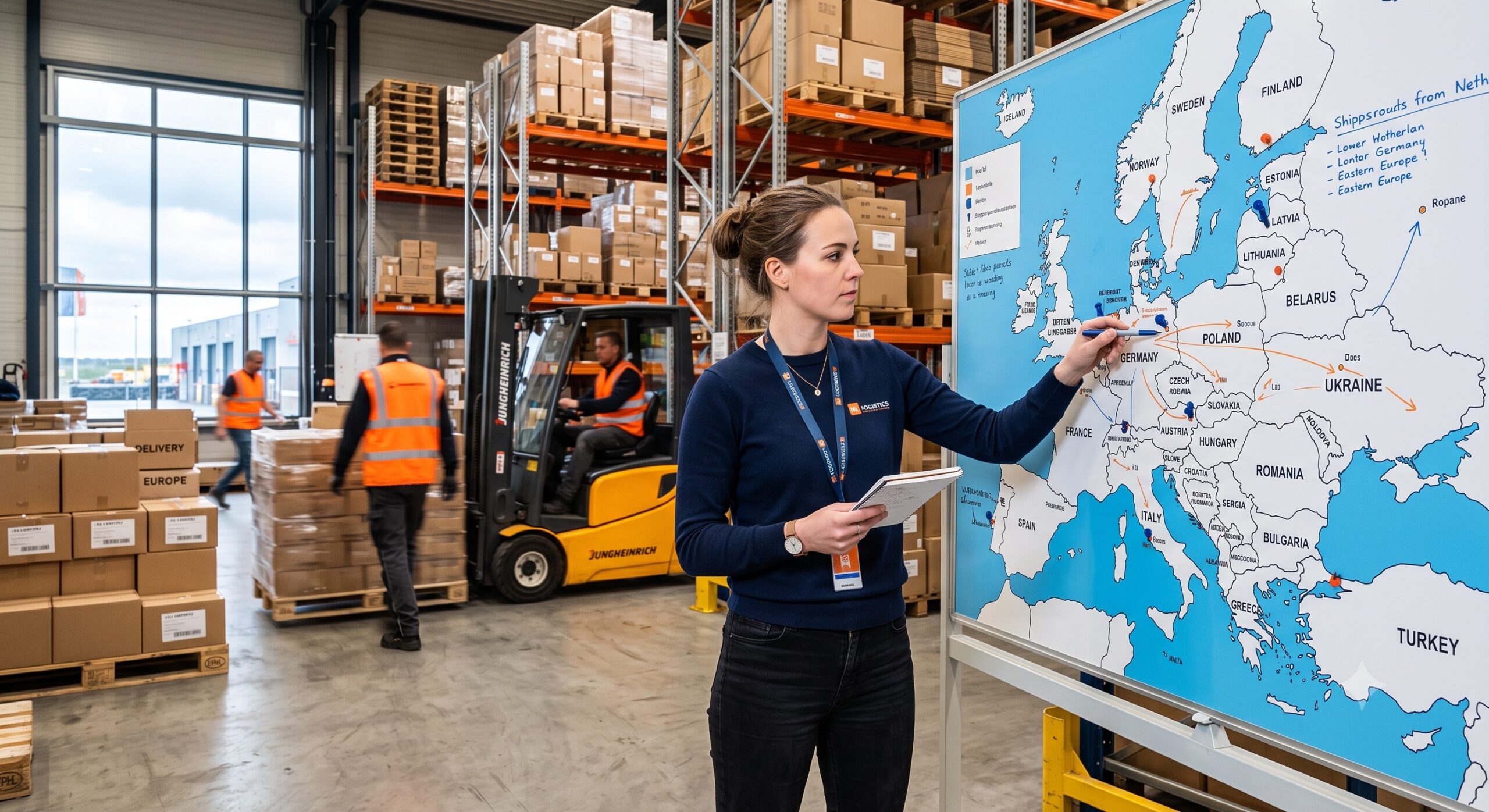
Cross-border shipping challenges for Dutch SMEs are not a new problem, but they are getting harder to ignore as more small businesses try to sell internationally.
Introduction
Cross-border shipping challenges for Dutch SMEs are not a new problem, but they are getting harder to ignore as more small businesses try to sell internationally. The Netherlands has one of Europe’s most export-oriented economies, yet the practical reality of getting a parcel from Amsterdam to a customer in Paris, Warsaw, or Toronto is full of friction, cost surprises, and compliance traps that large companies absorb easily but small ones cannot. This article walks through the real landscape: what solutions exist, where each one breaks down, and what the specific risks are for ZZPs and small online shops.
- Conventional carriers offer reliability but price smaller shippers out of competitive rates.
- Postal services are cheaper but slow, and tracking quality drops sharply outside the EU.
- 3PLs and freight forwarders solve volume problems but add complexity small businesses rarely need.
- Customs compliance is the most underestimated risk: a single wrong document can freeze a shipment for weeks.
- Peer-to-peer shipping models are emerging as an alternative, but they carry their own operational risks.
- No single method works for every SME. The right fit depends on volume, destination, and product type.
The Starting Point: Why Cross-Border Is Different From Domestic
Shipping within the Netherlands is largely solved. PostNL, DHL Parcel, and DPD have dense domestic networks. A parcel dropped off Monday morning is usually at the door by Tuesday. Pricing is predictable. Returns are straightforward.
Cross a border and almost everything changes. You are dealing with different carrier networks, handoffs between postal systems, customs declarations, import duties, VAT rules that vary by country, and delivery standards you cannot control. A shipment that takes one day domestically can take ten days internationally, and the customer blames the shop, not the carrier.
For a ZZP selling handmade ceramics or a small online shop shipping electronics accessories, these are not abstract risks. They show up as chargebacks, bad reviews, and customers who simply never come back.
How Dutch SMEs Currently Handle It
Most small Dutch businesses use one of four approaches. Each has a real use case and a real ceiling.
Conventional Express Carriers
DHL Express, FedEx, and UPS are the default choice for businesses that need speed and end-to-end tracking. They handle customs paperwork, offer door-to-door service, and have global networks. If a shipment goes wrong, there is a claims process.
The problem is cost. Express rates for a 5 kg parcel from the Netherlands to the United States can easily run 60 to 120 euros per shipment. For a business shipping ten parcels a month, that is manageable. For one shipping two or three, it can wipe out the margin on the sale entirely. Purolator International notes that small shippers consistently pay the highest per-unit rates because they lack the volume to negotiate contracts.
PostNL International
PostNL’s international services are significantly cheaper than express carriers. They work well for low-value, non-urgent shipments within the EU. Tracked letter formats and small parcel options keep costs down.
Outside the EU, the picture gets messier. PostNL hands off to local postal operators, and tracking often disappears at the border. Delivery times to non-EU destinations can stretch to three or four weeks. For a customer who paid for a product online, three weeks of silence is a support ticket waiting to happen.
Third-Party Logistics Providers (3PLs)
A 3PL warehouses your stock and ships on your behalf, using their own carrier contracts. Because they aggregate volume across many clients, they can offer rates a single SME cannot access. Some 3PLs also handle returns, customs documentation, and last-mile delivery in destination countries.
The catch is the setup cost and minimum volume. Most 3PLs want a meaningful monthly shipment count before the economics work for them. A ZZP shipping 20 parcels a month is not their target client. And once you hand over your inventory, you lose direct control over packing quality and dispatch timing.
Freight Forwarders
Freight forwarders are intermediaries who arrange transport on behalf of shippers, typically for larger or more complex consignments. They are excellent at navigating customs, consolidating shipments, and handling air or sea freight. For a small online shop sending individual consumer parcels, they are usually overkill. Their value appears when you are shipping pallets or dealing with complex import regulations in markets like Brazil or India.
| Method | Typical Cost (5 kg, NL to US) | Speed | Tracking Quality | Customs Handling | Best For |
|---|---|---|---|---|---|
| Express Carriers (DHL, FedEx) | 60 to 120 EUR | 2 to 5 days | Full, real-time | Included | High-value, urgent shipments |
| PostNL International | 15 to 35 EUR | 5 to 28 days | Partial (drops at border) | Sender responsible | Low-value EU parcels |
| 3PL | Negotiated (volume-dependent) | 3 to 10 days | Good | Usually included | Regular, high-volume shippers |
| Freight Forwarder | Variable (per consignment) | Days to weeks | Moderate | Core service | Bulk, complex, or regulated goods |
| P2P / Traveler Shipping | Negotiated (typically lower) | Trip-dependent | Limited | Sender responsible | Non-urgent, lower-value items |
Where Every Solution Has a Ceiling
Customs: The Hidden Bottleneck
Customs is where most small-business shipments actually fail. Nextexit Logistics points out that incomplete or incorrect commercial invoices are the single most common cause of customs delays. For a small Dutch shop, this means knowing the correct HS (Harmonized System) tariff code for every product, declaring accurate values, and understanding import duty thresholds in every destination country.
That is a lot to ask of a ZZP who is also managing their own website, customer service, and product sourcing. Averitt’s guide to cross-border shipping flags that even experienced shippers regularly underestimate how much documentation varies by destination. What works for Germany may not work for the UK post-Brexit, and what works for the UK may not work for Canada.
A single missing field on a customs form can hold a shipment for days. The carrier will not always alert the sender. The customer just sees “in customs” and waits.
Language and Local Knowledge Gaps
Armstrong Transport highlights that language barriers and unfamiliarity with local regulations are persistent problems for smaller shippers. A Dutch SME shipping to Poland or Romania may not know that certain product categories require additional import permits, or that local delivery infrastructure in rural areas is unreliable.
Large carriers have local teams who handle this. Small shippers often discover the problem only after a parcel is refused or returned.
Reliability and the Last Mile
Even when a shipment clears customs cleanly, the last mile in the destination country can fail. Carriers hand off to local postal operators or regional couriers, and service standards vary enormously. A parcel that DHL tracks perfectly from Amsterdam to Warsaw may spend five days in a local depot before a delivery attempt.
For small online shops, this creates a customer experience problem that is genuinely hard to manage. The shop cannot control what happens after the handoff, but the customer holds the shop responsible.
The Specific Pressure on ZZPs and Small Online Shops
Everything described above hits harder when you are a one-person business or a shop shipping fewer than 50 parcels a month. A European Parliament briefing on SME cross-border trade found that smaller firms face proportionally higher compliance costs and are less able to absorb delays or disputes than larger companies.
The practical consequences are real:
- Margin erosion: Shipping a 25-euro product internationally via express carrier can cost more than the product itself. Many ZZPs simply stop offering international shipping after the first few bad experiences.
- Cart abandonment: When shipping costs are high or delivery times are long, customers leave. International shoppers are particularly sensitive to both.
- Returns complexity: A returned international shipment often costs as much to receive back as it did to send. Many small shops write off returns entirely, which is not sustainable.
- Compliance exposure: A ZZP who gets a customs declaration wrong is personally liable. There is no legal team to handle it.
The result is that many small Dutch businesses simply do not ship internationally, or they limit themselves to Belgium and Germany where language and logistics are manageable. That is a real constraint on growth, and it is not a choice most of them want to make.
P2P Shipping: A Newer Option With Its Own Risks
Peer-to-peer shipping, where a traveler carries a parcel in their luggage for a fee, has grown as an alternative for senders who cannot afford express rates. The concept is covered in more depth in the blog post on bridging the gap in international shipping. The basic idea is that a traveler already flying from Amsterdam to, say, Toronto has spare luggage capacity. A sender pays them to carry a parcel. Both sides benefit.
For a small Dutch business, the appeal is obvious: lower cost, a human carrier who has a personal stake in the delivery, and flexibility on timing. But the risks are real and worth understanding before committing.
What Can Go Wrong With P2P Shipping
Customs responsibility does not disappear. The sender is still legally responsible for the contents of the parcel. If a traveler carries something that triggers customs inspection, the sender may face penalties. Travelers are not customs agents, and they may not know how to handle a border question correctly.
Insurance is limited or absent. Standard travel insurance does not cover commercial parcels. If the item is lost, damaged, or confiscated, recovery is difficult without a formal contract and escrow arrangement.
Timing is trip-dependent. A traveler flies when they fly. If your customer needs the parcel by a specific date, P2P is a gamble unless the platform can match you with a traveler on the right route at the right time.
Trust is the core problem. Handing a parcel to a stranger requires confidence that they will actually deliver it, handle it carefully, and not open it. Without identity verification, fraud checks, and a structured payment process, P2P shipping is informal and risky for both sides.
Platforms that operate in this space vary significantly in how they address these risks. Some are little more than bulletin boards. Others build compliance infrastructure around the transaction. If you are considering P2P for your business, the questions to ask are: Is the traveler identity-verified? Is payment held in escrow until delivery is confirmed? Is there regulatory guidance on what can and cannot be shipped? The answers tell you whether the platform is a tool or just a marketplace with no guardrails.
SendByPass: One Platform in This Space
SendByPass is a Netherlands-based P2P shipping platform that connects Dutch senders with verified travelers heading to destinations worldwide. It targets the specific gap between expensive express carriers and informal, unstructured P2P arrangements. The platform uses identity verification, fraud checks, and escrow payments to add structure to what is otherwise an informal transaction. Travelers, often international students, earn around 50 euros per trip. Senders get rates below express carrier prices.
It is worth noting that many Dutch SMEs are already shipping internationally without this tool, using the conventional methods described above. SendByPass is one option for senders who want lower costs and are comfortable with the P2P model, not a replacement for established logistics infrastructure. You can read more about how traveler-based shipping works in the post on earning money with spare luggage space.
Choosing the Right Approach
There is no universal answer. The right shipping method depends on four things: what you are shipping, where it is going, how often you ship, and how much margin you have to absorb costs.
A few practical rules that hold across most situations:
- If you ship more than 100 parcels a month internationally, talk to a 3PL. The volume justifies the setup cost.
- If you ship high-value or time-sensitive goods, use an express carrier and build the cost into your pricing.
- If you ship low-value goods occasionally to EU destinations, PostNL international is often the most practical option despite its limitations.
- If you are exploring non-EU markets for the first time, a freight forwarder can help you understand the compliance landscape before you commit to a regular shipping operation.
- If you are open to P2P, vet the platform carefully on trust and compliance infrastructure before using it for business shipments.
The businesses that handle cross-border shipping well are not necessarily using the most sophisticated tools. They are the ones who have matched the right tool to their actual volume and destination mix, and who have invested time in understanding customs requirements before a shipment gets held.
Conclusion
Cross-border shipping is genuinely hard for small Dutch businesses, and the difficulty is not evenly distributed. A ZZP or small online shop faces the same compliance requirements as a large exporter but has none of the volume leverage, legal support, or operational buffer. The solutions that exist, from express carriers to postal services to 3PLs to P2P platforms, each solve part of the problem and create new constraints.
The practical next step is to audit your current shipping situation honestly. What does each shipment actually cost, including your time? Where do delays happen? What are customers complaining about? The answers will point you toward the method that fits your business, not the one that sounds most appealing in a blog post.
If you want to go deeper on how alternative logistics models are evolving, the post on why crowdsourced shipment is growing covers the broader shift happening in international logistics.
Frequently Asked Questions
What is the biggest cross-border shipping challenge for Dutch SMEs?
Customs compliance is consistently the hardest part. Incorrect or incomplete documentation is the most common cause of delays and holds, and the rules vary significantly by destination country. Small businesses often discover this only after a shipment is already stuck.
Is PostNL a good option for international shipping from the Netherlands?
For low-value, non-urgent shipments within the EU, PostNL international is cost-effective. Outside the EU, tracking quality drops after the handoff to local postal operators, and delivery times can stretch to several weeks. It is not reliable for time-sensitive or high-value goods.
When does it make sense for a small Dutch business to use a 3PL?
A third-party logistics provider starts to make financial sense when you are shipping regularly, typically more than 50 to 100 parcels per month internationally. Below that volume, the setup costs and minimum commitments usually outweigh the rate savings.
What are the main risks of P2P shipping for a business?
The key risks are customs liability (the sender remains legally responsible for the contents), lack of insurance for commercial goods, timing uncertainty tied to traveler schedules, and trust issues if the platform does not verify identities or hold payments in escrow. Platforms vary widely in how well they address these risks.
Do Dutch SMEs have to pay VAT on international shipments?
VAT rules for cross-border shipments are complex and depend on the destination, the value of the goods, and whether the buyer is a business or a consumer. EU rules changed significantly in 2021 with the introduction of the One Stop Shop (OSS) scheme. For non-EU destinations, import VAT is typically collected by the destination country. Consulting a tax advisor before scaling international sales is strongly recommended.
Can a ZZP realistically compete internationally given shipping costs?
Yes, but it requires careful product selection and pricing. ZZPs with higher-margin products, unique goods, or digital-physical hybrids can absorb shipping costs more easily. Those selling low-margin commodities internationally often find that shipping costs make the economics unworkable without significant volume or a logistics partner who offers better rates.
Sources
- Nextexit Logistics: Cross-Border Shipping Challenges and Solutions, covers documentation errors and customs delays as primary causes of shipment holds.
- Averitt: Best Practices and Solutions for Cross-Border Shipping, discusses how compliance requirements vary by destination and the risks for smaller shippers.
- Armstrong Transport: The Challenges of Cross-Border Shipping and How to Avoid Them, highlights language barriers and local regulation gaps as persistent problems.
- European Parliament Briefing: Challenges and Concerns for Small and Medium-Sized Enterprises in Cross-Border Trade, documents disproportionate compliance costs for smaller firms.
- Purolator International: Cross-Border Shipping Challenges and Opportunities in 2025, notes that low-volume shippers pay the highest per-unit rates due to lack of negotiating leverage.